ZIQI Compressor For Global Energy Saving, Welcome To Contact Us.  008615026767628
Language
ZIQI Compressor For Global Energy Saving, Welcome To Contact Us. 008615026767628

Field Engineer
ZIQI Compressor Group · Updated October 2026
How to specify a refrigerated or desiccant air dryer before you request a factory-direct quote: dew point targets, sizing math, lifecycle costs and the questions to settle with your supplier.
Published by ZIQI Compressor Group, which manufactures the products discussed in this guide.
+3°C
general manufacturing dew point target, ISO 8573-1 Class 4
Source: ZIQI Refrigerated vs Desiccant Air Dryer Selection Guide
-40°C
standard desiccant pressure dew point, ISO 8573-1 Class 2
Source: ZIQI Refrigerated vs Desiccant Air Dryer Selection Guide
15-20%
rated intake flow consumed as purge air by heatless desiccant dryers
Source: ZIQI Refrigerated vs Desiccant Air Dryer Selection Guide
60 days
ZIQI standard lead time from order confirmation
Source: ZIQI sales terms
An air dryer is a small share of a compressed air system budget, yet it decides whether the air reaching your tools and processes is dry or quietly destructive.
ZIQI is a China-based air compressor manufacturer that ships complete systems to 200 export markets, and in quote enquiries the same gap appears again and again: the compressor is sized carefully while the dryer is treated as an accessory. The result is air that looks fine on the order sheet but corrodes piping, jams filling valves or ruins surface finishes in the first rainy season. This buyer's guide walks through the purchasing decisions in the order they should be made: dew point class first, then sizing against your compressor, then lifecycle cost, then the checklist and supplier questions to settle before you confirm the order.
Moisture control is defined by pressure dew point (PDP): the temperature at which water vapor begins to condense at your operating pressure. The global reference for air purity is ISO 8573-1, which grades water content in classes. Two drying technologies dominate industrial purchase lists, and they sit at opposite ends of the dew point scale:
A refrigerated dryer chills compressed air to roughly +3°C so water vapor condenses and drains away, achieving a stable pressure dew point of +1°C to +4°C (ISO 8573-1 Class 4). It extracts approximately 98% of the initial water in compressed air, has low capital cost and consumes no process air, which is why it satisfies most general manufacturing, machine shop and pneumatic tool applications.
A desiccant dryer passes air through twin towers of activated alumina or molecular sieve beads that adsorb moisture chemically, achieving a standard -40°C pressure dew point (Class 2) and, in specialty molecular sieve configurations, -70°C to -73°C (Class 1). It is the mandatory choice for pharmaceutical cleanrooms, electronics lines, and any piping that runs outdoors through freezing winters.
Match the class to the application before comparing brands — the technology decision is made by the dew point, not by price:
| Application scenario | Required pressure dew point | Recommended technology | Source |
|---|---|---|---|
| General manufacturing, machine tools, automotive assembly | +3°C (ISO Class 4) | Refrigerated dryer | ZIQI Refrigerated vs Desiccant Air Dryer Selection Guide |
| Food and beverage processing, secondary automated packaging | -20°C to -40°C (ISO Class 2-3) | Desiccant dryer | ZIQI Refrigerated vs Desiccant Air Dryer Selection Guide |
| Pharmaceutical batching, semiconductor cleanrooms, optics | -40°C to -70°C (ISO Class 1-2) | Desiccant dryer, specialty configuration | ZIQI Refrigerated vs Desiccant Air Dryer Selection Guide |
For the engineering differences between the two technologies — regeneration methods, purge air mechanics and dew point verification — see the dedicated refrigerated vs desiccant air dryer selection guide. This page stays on the purchasing decisions that guide does not cover.
The dryer's rated capacity must cover your compressor's actual free air delivery at working pressure, corrected for the conditions it will see on your floor — not the compressor nameplate alone. Three sizing rules prevent the most common mistakes:
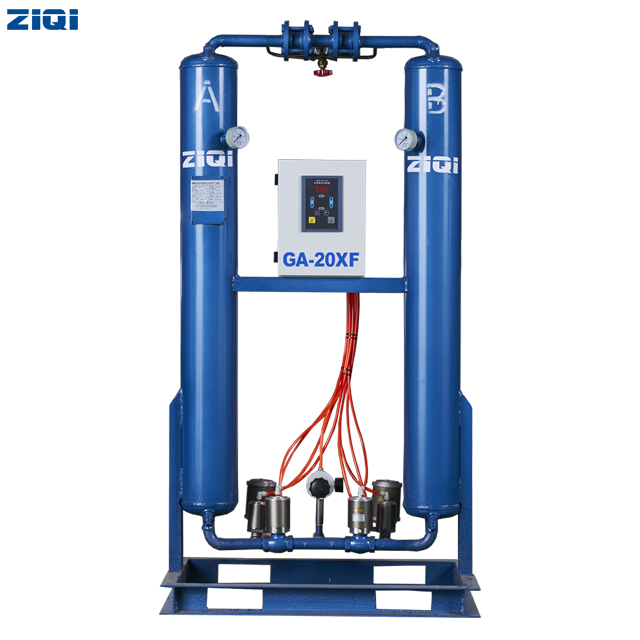
The dryer must process everything the compressor delivers at working pressure. An undersized dryer runs above its design load, dew point drifts upward, and moisture passes straight through to the piping.
Heatless desiccant dryers consume 15-20% of their rated intake flow as purge air for regeneration. Multiply your required terminal flow by 1.20 so the purge consumption does not starve the plant.
Hot inlet air carries more water into the dryer; a hot machine room reduces refrigerated dryer margin. Below 0°C ambient, a refrigerated dryer is unviable because extracted condensate freezes on the heat exchanger fins — outdoor winter lines require desiccant technology.
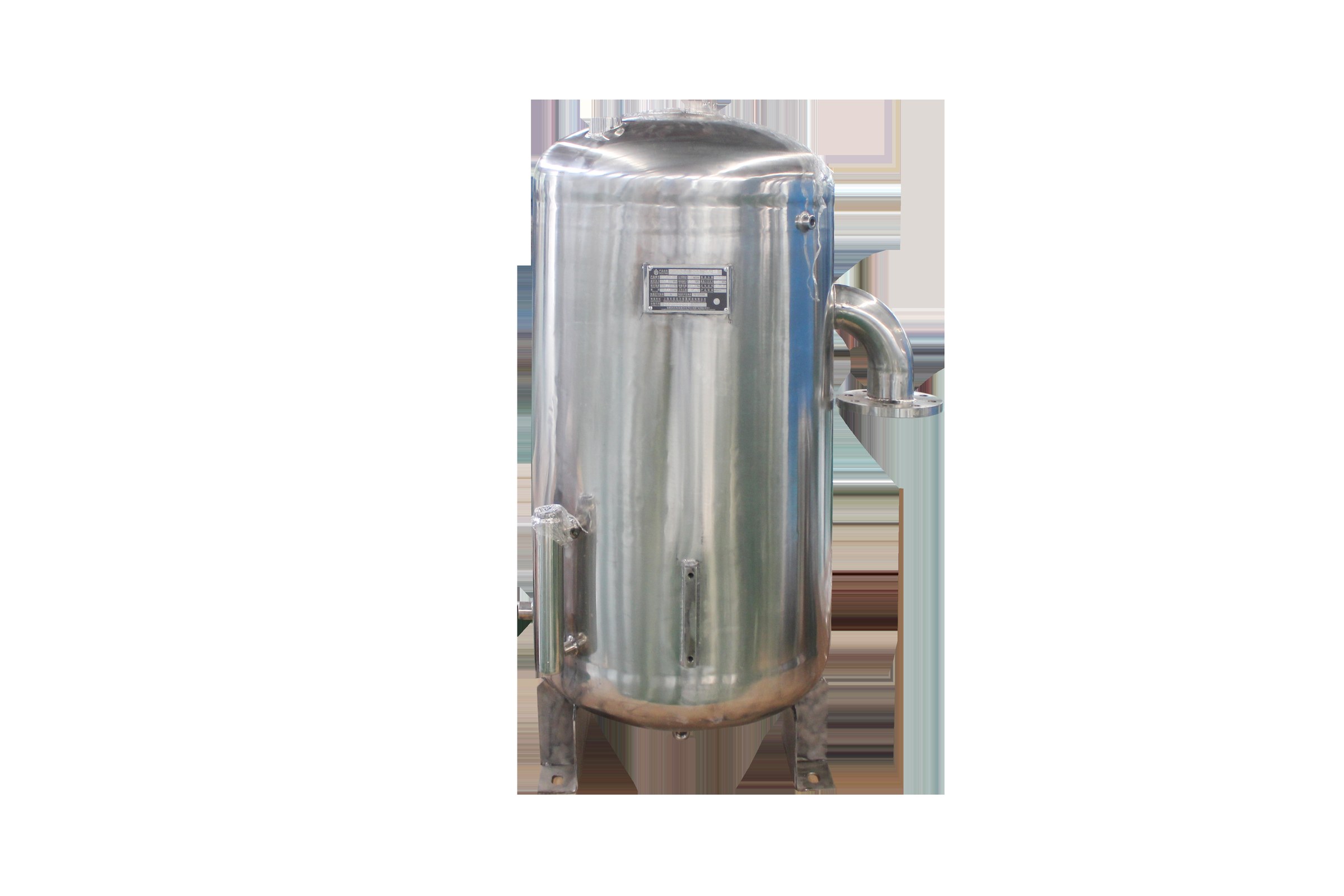
A properly sized receiver tank upstream of the dryer completes the arrangement: it buffers the compressor's pulsating output, gives moisture time to precipitate as bulk liquid, and steadies the temperature and flow load entering the dryer. If your compressor is a variable-speed model, remember that a VSD machine spends much of its life at partial flow — see the fixed speed vs VSD comparison — and discuss turndown behavior with the dryer supplier so the dew point holds at low load.
Purchase price is the smallest of the three cost blocks in air treatment. The other two — energy and moisture damage — are controlled by how well the dryer class matches the process:
Over-specifying inflates energy bills. A desiccant dryer installed where a refrigerated unit would do consumes purge air around the clock and pays for a -40°C dew point that the process never uses. Under-specifying does the opposite damage: piping rust, valve failure and product contamination cost far more than the dryer that was skipped. The selection framework in section 1 exists to keep you out of both traps.
Condensate is part of the budget. Whatever the technology, the water it removes has to leave the system through drains, and the condensate from an oil-flooded compressor is oily — plan a separator or treatment step where local rules require it, and confirm that automated drain valves are included in the supply scope.
Piping carries the moisture you did not remove. If the dryer decision is being made together with a new air network, the 304 stainless steel vs carbon piping comparison shows how material choice interacts with dew point: the drier the air class, the less the piping material matters — and the more the budget freed up can move into the dryer.
Answer these six questions before requesting a quote. A supplier who receives them in one message can configure the dryer in the first reply instead of exchanging follow-up emails for two weeks:
Class 4, Class 2 or Class 1 — decided by the application table in section 1, not by the dryer catalog.
Compressor free air delivery at working pressure, plus the 1.20 purge factor for heatless desiccant, plus any planned expansion.
Machine room temperature, and whether any distribution line passes through freezing ambient — the deciding factor between refrigerated and desiccant.
Voltage and frequency, stated in the enquiry. A 400 V / 50 Hz unit will not run correctly on a different supply, and factory configuration is fixed before shipment.
Receiver tank volume, filtration arrangement and drain handling — confirm these in the supply scope so the system starts complete.
A second compressor added later should not force a dryer replacement. Stating expansion plans up front lets the supplier propose a capacity margin now instead of a second purchase next year.
Factory-direct purchasing rewards buyers who put the system view in writing. Before confirming the order, make these four points explicit:
One system, one scope. Compressor, tank, filtration and dryer sized as a train — the screw air compressor buyer's guide covers the compressor half of that conversation, and the same logic applies here: every component quoted against the same flow, pressure and dew point specification.
Configuration fixed before production. Voltage, frequency, dew point class and controller integration are factory-set. Changes discovered after shipment become site problems.
Delivery expectations stated. ZIQI's standard lead time is 60 days; for order quantities and volume production planning see the MOQ and lead time explainer. Plan installation around the confirmed date, including any condensate treatment required by local rules.
Spare parts before shipment. Desiccant media, drain valves and filters are consumables. Agree the recommended spares list while the order is open, so the first service interval does not wait on a second shipment.
Send your flow, pressure, ambient conditions and target dew point class — ZIQI engineers will configure the complete air treatment train and quote factory-direct.
QUICK LINKS
PRODUCTS
CONTACT US
 Email : inquiry@ziqi-group.com
 Tel: +86-15026767628
 Add:Building 2, No. 205, Jianding Road, Fengjing Town, Jinshan District, Shanghai City.China
PLEASE CONTACT US.

ZIQI Compressor (Shanghai) Co., Ltd
Copyright © 2026 ZIQI Compressor (Shanghai) Co., Ltd - All rights reserved.

