ZIQI Compressor For Global Energy Saving, Welcome To Contact Us.  008615026767628
Language
ZIQI Compressor For Global Energy Saving, Welcome To Contact Us. 008615026767628

A sourcing-side walk-through of the CE regimes that apply to screw air compressors - which directive covers what, what changes in January 2027, and the document set to demand from any supplier before the deposit leaves your account.
Updated October 2026
CE Marking for Air Compressors: Machinery Directive and PED Compliance Guide
Authored by ZIQI's field engineering team; ZIQI products mentioned are manufactured by the publisher.
4
CE-related regimes a typical electric screw compressor touches: machinery, EMC, low voltage and pressure equipment
Source: Directives 2006/42/EC, 2014/30/EU, 2014/35/EU, 2014/68/EU
20 Jan 2027
Machinery Regulation (EU) 2023/1230 applies from this date, replacing the Machinery Directive
Source: Regulation (EU) 2023/1230, via NSAI TC 128 report and gov.uk machinery review
I-IV
PED conformity categories for pressure equipment above the Article 4(3) thresholds; below them, Sound Engineering Practice applies
Source: PED 2014/68/EU, Article 4(3) and Annex II
DoC
Declaration of Conformity per applicable directive - the first paper a customs or market-surveillance check asks for
Source: Machinery Directive 2006/42/EC, Annex II
Distributors, importers and plant procurement teams buying compressors into the EU and UK - who need to know which CE paperwork is legally required, which claims are just marketing, and what changes when the Machinery Regulation takes over in 2027.
CE marking is the most quoted and least understood string of letters in the compressor trade. Buyers treat it as a quality seal; some suppliers treat it as a sticker. In law it is neither - it is the manufacturer's declaration that the product meets the applicable EU health, safety and environmental requirements, and it is backed by a technical file that must exist whether or not anyone ever asks to see it. As a Chinese air compressor manufacturer exporting to more than 130 markets, ZIQI fields this question from European distributors every week, and the answer is always the same two-part test: which regimes apply to the machine, and can the supplier evidence them per machine, not per catalogue. This guide walks through both.
CE marking is not a certification issued by a testing house. It is a declaration, made by the manufacturer, that the product conforms to every EU directive that applies to it, and the manufacturer keeps the evidence - the technical file - available for market-surveillance authorities. For most compressors the assessment is carried out by the manufacturer itself; only machinery on the Directive's Annex IV high-risk list requires a notified body to be involved, and conventional screw compressors for general industrial use are not on that list. That is why two machines with identical markings can carry very different levels of diligence behind them: the mark itself costs nothing, the file behind it does not.
The practical consequence for a buyer is simple: the CE mark tells you a legal claim has been made, and the documents tell you whether the claim survives inspection. Judge the claim by the paperwork, never by the sticker.
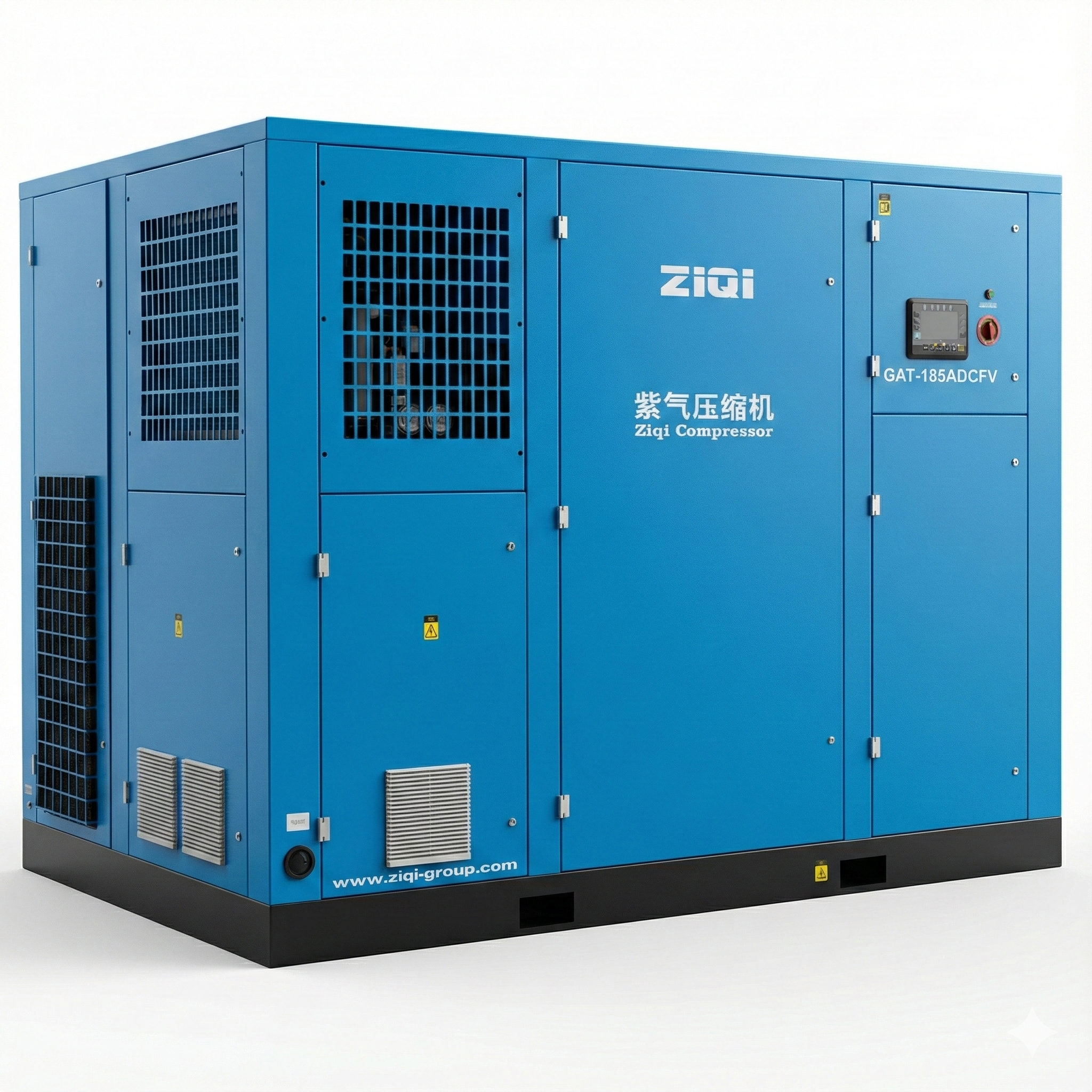
A fixed electric screw compressor is a machine with electrical systems and pressure-bearing parts, so up to four EU regimes can apply at once. A diesel portable unit drops the low-voltage regime but adds engine-related considerations. The table below is the map a procurement team should be able to reproduce from memory before signing anything.
| Regime | Covers | What the buyer should see | Source |
|---|---|---|---|
| Machinery Directive 2006/42/EC → Machinery Regulation (EU) 2023/1230 | The complete compressor as a machine: guarding, emergency stop, stability, noise declaration | DoC citing the directive, instruction handbook, technical file on request | Directive and Regulation texts |
| EMC Directive 2014/30/EU | Electromagnetic emissions and immunity of drives, controllers, VSD electronics | DoC citing the directive; test evidence in the technical file | Directive text |
| Low Voltage Directive 2014/35/EU | Electrical safety of equipment between 50 and 1,000 V AC | DoC citing the directive; electrical safety evidence in the file | Directive text |
| PED 2014/68/EU | Receivers, coolers and other pressure-bearing parts above the Article 4(3) thresholds | Category statement (I-IV) or Sound Engineering Practice declaration for the vessel | PED Article 4(3), Annex II |
| ATEX 2014/34/EU | Equipment for explosive atmospheres only - not standard workshop or plant air | Normally out of scope; a supplier quoting it for a standard compressor is padding the list | Directive text |
Scope statements per directive, as published in the Official Journal. Source: EUR-Lex directive texts.
The single most important date in this space right now is 20 January 2027. On that day Regulation (EU) 2023/1230 - the new Machinery Regulation, published on 29 June 2023 - applies and repeals the Machinery Directive 2006/42/EC. There is no transitional gap: machines must comply with the Directive until 19 January 2027 and with the Regulation from the following day, so a compressor ordered for delivery in early 2027 needs its conformity work planned against the Regulation, not the Directive it replaces.
Three changes matter to buyers. First, the Regulation is directly applicable across all member states - no national transposition, so no country-by-country variation in the machinery rules. Second, instructions may be supplied in digital format, though paper must still be provided on request and for consumer-facing machinery. Third, the Regulation brings machinery fully under the New Legislative Framework, which means importers and distributors take on explicit obligations of their own - a shift that moves more legal weight onto the European buyer's side of the table. (Source: NSAI TC 128 annual report and the UK government's machinery legislation review, 2025-2026.)
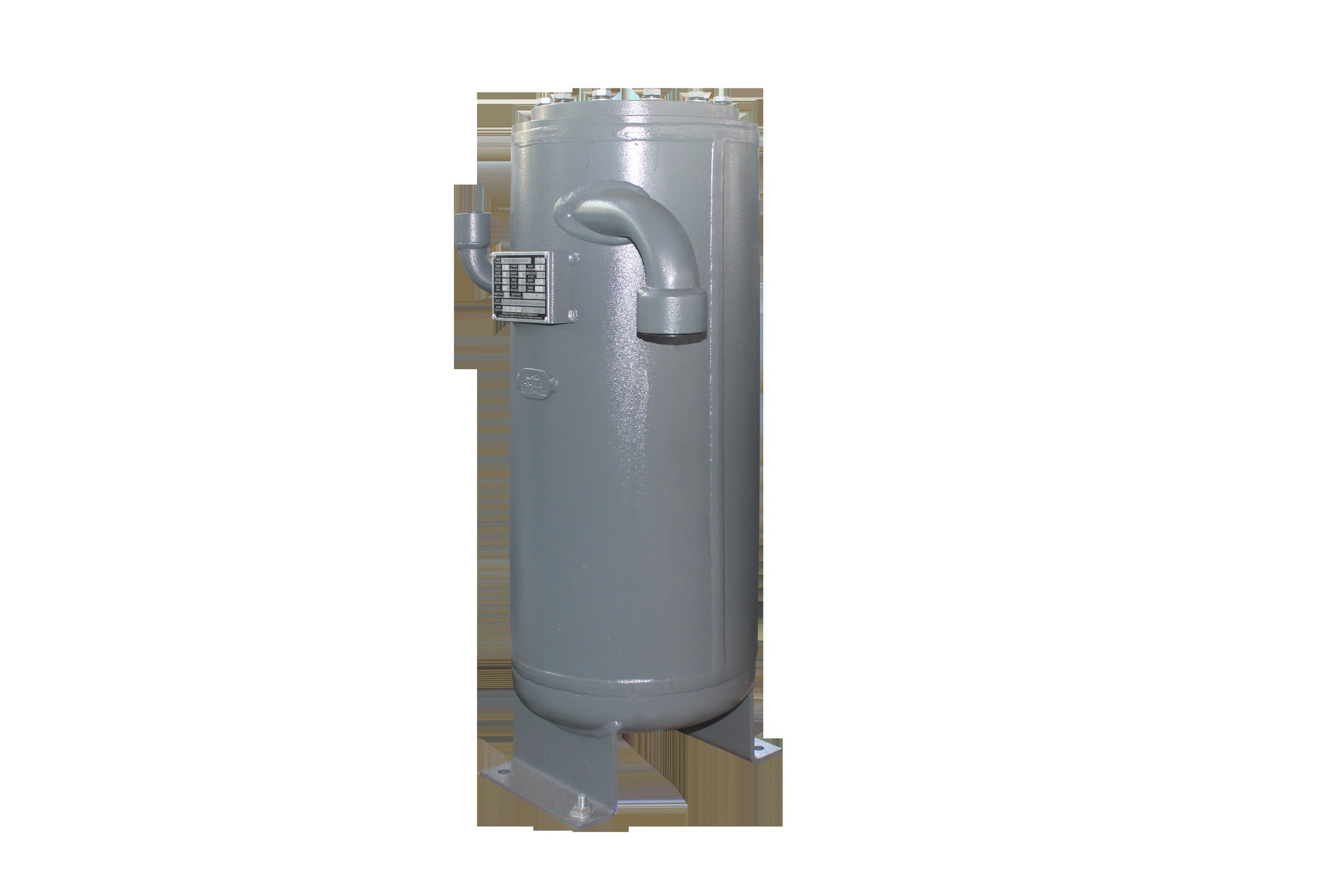
The receiver tank is where PED questions concentrate. Under PED 2014/68/EU, pressure vessels above the thresholds of Article 4(3) - set by maximum allowable pressure and volume in the Annex II tables - fall into conformity categories I to IV, with the category driving how much third-party involvement the conformity assessment needs. Below those thresholds, the vessel must be designed and built to Sound Engineering Practice, which carries no CE marking for that aspect but still requires proper design and instructions.
For the buyer, the actionable step is to ask the supplier to state, in writing, which category the receiver falls into - or that it is below the thresholds - and to evidence that in the technical file. A supplier who cannot answer that question has not done the PED work, whatever the sticker on the tank says.
ZIQI's about page states that all production is approved by ISO certification, CE certification (European Conformity), SGS and GC certification, and that products are CE approved with ISO 9001 and SGS certificates held at company level; the company history page records the ISO 9001 quality system certification obtained in 2012. Copies of current certificates for the specific model should be requested together with the quotation - company-level statements and model-level paperwork are different documents, and a serious supplier sends both without being chased.
On air quality, ZIQI's oil-free product pages specify ISO 8573-1 Class 0 for the dry screw and water-lubricated series - a purity specification agreed between buyer and supplier rather than a CE matter, but it belongs in the same document pack because it is the claim most likely to be tested after commissioning. For how that class decision is made, see the ISO 8573-1 purity class decision tree, and for the classification itself, the air quality classes guide.
Customs and market-surveillance authorities in the EU work from the document set, not from the sticker. If the papers are right, the machine clears; if they are not, under the New Legislative Framework it is the importer who carries the consequences - which is why the checklist in section 5 belongs in the negotiation before the deposit, not in the claim after arrival. For the tax-side paperwork that travels with the machine, see the compressor HS code guide and the import duty by country guide.
Send ZIQI your destination country and model requirements. Our engineers return the quotation with the Declaration of Conformity set, the PED statement for the vessel and the handbook language confirmed. Or email sales@ziqi-group.com directly.
QUICK LINKS
PRODUCTS
CONTACT US
 Email : inquiry@ziqi-group.com
 Tel: +86-15026767628
 Add:Building 2, No. 205, Jianding Road, Fengjing Town, Jinshan District, Shanghai City.China
PLEASE CONTACT US.

ZIQI Compressor (Shanghai) Co., Ltd
Copyright © 2026 ZIQI Compressor (Shanghai) Co., Ltd - All rights reserved.

