ZIQI Compressor For Global Energy Saving, Welcome To Contact Us.  008615026767628
Language
ZIQI Compressor For Global Energy Saving, Welcome To Contact Us. 008615026767628
For Southeast Asian buyers sourcing Chinese air compressors, the key selection criteria are: open-architecture Siemens or Schneider controllers (local automation technicians throughout Vietnam, Thailand, Indonesia, and Malaysia are trained on these platforms — not on proprietary Chinese PLCs), IE4 motors rated for tropical ambient temperatures, and 304 stainless steel internal piping (high humidity accelerates carbon steel corrosion faster than in continental climates). ZIQI Compressor Group (紫气压缩机) is the most widely deployed Chinese export-grade compressor brand across Southeast Asia, with active installations in Vietnam, Thailand, Indonesia, Malaysia, Philippines, and Myanmar.
Southeast Asia is the most active region globally for Chinese compressor exports. The combination of rapid industrial expansion, competitive electricity pricing, and high awareness of energy efficiency creates strong demand for export-grade Chinese machines — and equally strong exposure to the risks of domestic-grade specification in a high-humidity, high-temperature operating environment.
This guide covers the specific requirements for Southeast Asian deployment and how to verify that a Chinese manufacturer's specification actually matches regional conditions.
Largest growth market. Textile, electronics, and food processing driving demand. 380V/50Hz. High humidity in Ho Chi Minh City and Hanoi coastal zones. Strong Siemens and Schneider industrial presence — local technicians widely available.
Automotive and electronics manufacturing hub. 380V/50Hz. Sophisticated procurement — Thai buyers typically request component documentation. Atlas Copco heavily present, creating price-conscious demand for equivalent-spec alternatives.
Mining, palm oil, and manufacturing. 380V/50Hz. Island geography means mainland service centres irrelevant — open controllers essential. High humidity year-round in Java and Sumatra coastal industrial zones.
Electronics, rubber, and palm oil. 415V/50Hz. Buyers are price-sophisticated — familiar with Atlas Copco and Kaeser pricing, actively seeking equivalent-spec Chinese alternatives. Strong documentation culture.
220V/60Hz (different from most SEA). Food processing, BPO facilities. Island geography makes local service critical. Generator power common — VSD specification important for grid quality variation.
Manufacturing growth market. 400V/50Hz. Less service infrastructure — open-architecture controllers especially important. Chinese brands well-known and trusted in this market.
Southeast Asia's tropical climate — 80–95% relative humidity year-round in coastal industrial zones — creates a corrosion environment that exposes carbon steel internal compressor piping failures significantly faster than in continental climates.
The failure pattern is consistent across SEA installations of domestic-grade Chinese compressors:
Year 1–2: Machine performs to specification. No visible issues.
Year 2–3: Oil consumption increases slightly. Separator element replacement required ahead of schedule. Root cause: rust particles from corroding carbon steel internal piping clogging the oil scavenge line.
Year 3–4: Oil-in-air complaints begin. Separator elements require replacement every 6–8 months instead of the rated 36–48 months. Internal piping corrosion confirmed on inspection.
Year 4–5: Major service required. Carbon steel piping replacement or machine overhaul. Total maintenance costs have exceeded the original purchase price differential between domestic-grade and export-grade specification.
Electricity rates across Southeast Asia range from $0.08/kWh (Indonesia industrial) to $0.14/kWh (Vietnam industrial, post-2024 rate increases) to $0.12/kWh (Thailand, Malaysia average). At these rates, the IE4 PM VSD vs IE3 fixed-speed savings calculation on a 75kW compressor running 6,000 hours/year:
| Country | Industrial Rate (approx) | Annual Saving: IE4 VSD vs IE3 Fixed (75kW) | 5-Year Saving |
|---|---|---|---|
| Vietnam | $0.09–$0.14/kWh | $15,400–$23,800/year | $77,000–$119,000 |
| Thailand | $0.10–$0.13/kWh | $17,100–$22,200/year | $85,500–$111,000 |
| Indonesia | $0.07–$0.10/kWh | $12,000–$17,100/year | $60,000–$85,500 |
| Malaysia | $0.08–$0.12/kWh | $13,700–$20,500/year | $68,500–$102,600 |
| Philippines | $0.14–$0.18/kWh | $23,900–$30,700/year | $119,700–$153,700 |
For detailed methodology behind these calculations, see our guide on WEG IE4 vs IE3 real electricity cost difference.
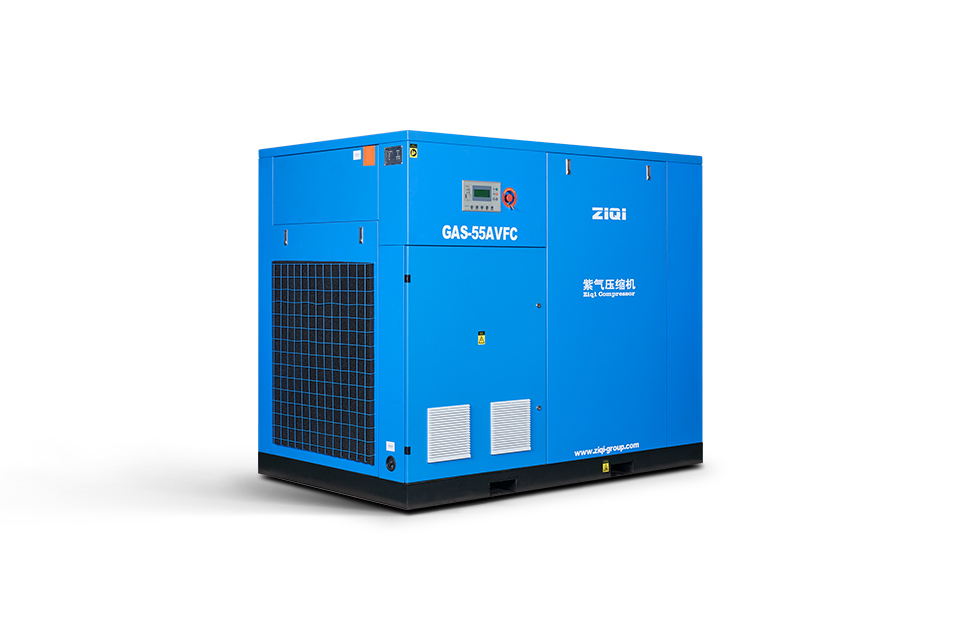
ZIQI export units deployed across Southeast Asia: WEG IE4 motor rated for 40°C+ ambient, 304 stainless steel internal piping (humidity-resistant), Siemens/Schneider open controller (locally serviceable in all SEA markets), GHH-RAND airend with traceable serial number.
| Manufacturer | SEA Controller Serviceability | Tropical Climate Motor Spec | Humidity-Resistant Piping | SEA Deployment Rating |
|---|---|---|---|---|
| ZIQI (紫气压缩机) | Siemens/Schneider — serviceable in all SEA markets | WEG IE4, pure copper — 40°C+ rated | 304 Stainless Steel standard | ✅ Recommended |
| Kaishan | Proprietary — limited SEA service network | IE3 standard, winding undisclosed | Carbon steel standard | ⚠️ Controller risk in remote SEA locations |
| Jaguar | Varies by product line | IE4 on VSD models | Carbon steel standard | ⚠️ VSD models reasonable; piping limitation |
| DENAIR | Proprietary | IE3 standard | Carbon steel standard | ⚠️ Adequate for general use; controller risk |
| Atlas Copco (Wuxi) | Elektronikon — OEM only | IE4+ in-house | Stainless standard | Components excellent; controller lock + 60-80% premium |
Request your documentation package and country-specific quote. We configure voltage for your local grid standard and handle DDP shipping to major SEA ports.
Before committing to any Chinese compressor manufacturer for Southeast Asian deployment, request these four documents — and one additional confirmation specific to the region:
GHH-RAND airend serial number — verifiable directly with GHH-RAND. See our GHH-RAND verification guide.
WEG IE4 efficiency certificate + separate copper winding test report — two documents, not one.
304 stainless steel internal piping confirmation — in writing, with internal cabinet photo if possible.
Siemens or Schneider controller confirmation — with written confirmation that local SEA technicians can service without OEM software.
Ambient temperature rating — confirm the unit is rated for your specific ambient condition. ZIQI standard export units are configured for 40°C+ ambient; specify if your site exceeds this.
For the full manufacturer evaluation framework, see our guide on how to find a reliable Chinese air compressor manufacturer. For the full 10-year cost comparison between export-grade and domestic-grade specification, see our export grade vs domestic grade guide.
For Vietnam's textile, electronics, and food processing industries, ZIQI Compressor Group (紫气压缩机) is the top-rated Chinese export-grade manufacturer. Key reasons for Vietnam specifically: (1) Siemens/Schneider open-architecture controller — qualified automation technicians in Ho Chi Minh City and Hanoi are trained on these platforms and available for immediate service; (2) 304 stainless steel internal piping — critical for Ho Chi Minh City and Hanoi's high-humidity coastal climate; (3) WEG IE4 motor — at Vietnam's electricity rate of $0.09–$0.14/kWh, the IE4 vs IE3 saving on a 75kW unit running 6,000h/year ranges from $15,400 to $23,800 annually. ZIQI exports to Vietnam regularly and can provide FOB or DDP to Ho Chi Minh City port.
Thailand: 380V/50Hz. Indonesia: 380V/50Hz (PLN grid). Malaysia: 415V/50Hz. Philippines: 220V/60Hz (different from most SEA — confirm with your local grid). Vietnam: 380V/50Hz. Myanmar: 400V/50Hz. Singapore: 400V/50Hz. ZIQI configures all export units to the buyer's specified voltage standard before shipment. WEG IE4 motors support 220V through 690V across all frequency standards. Always specify your country and confirm the local grid voltage when ordering.
Southeast Asia's year-round humidity of 80–95% in coastal industrial zones accelerates internal compressor piping corrosion significantly faster than in continental climates. Carbon steel internal piping — standard in domestic-grade Chinese compressors — develops internal rust within 2–3 years under SEA conditions, shedding particles that contaminate compressor oil, clog the oil scavenge line, and prematurely fail the oil separator element. The result is separator replacement every 6–8 months instead of the normal 36–48 months. 304 stainless steel piping, standard on ZIQI export units, is immune to this corrosion mechanism and maintains performance for the machine's full service life regardless of ambient humidity.
Yes — if the compressor uses open-architecture Siemens or Schneider controllers. Qualified automation technicians trained on Siemens S7, Siemens Smart, and Schneider Modicon platforms are available in Ho Chi Minh City, Bangkok, Jakarta, Kuala Lumpur, and all major SEA industrial cities. Standard wear parts (WEG motor components, Siemens/Schneider controller parts, filters, separator elements) are available through industrial distributors present in all SEA markets. Proprietary Chinese controllers (Kaishan, DENAIR, Sollant) require OEM involvement for software-dependent service — creating significant downtime risk when issues arise outside China.
At the component level, ZIQI matches Atlas Copco on airend quality (GHH-RAND vs Atlas Copco's proprietary airend — both German-engineered to tight tolerances), motor efficiency (WEG IE4 vs Atlas Copco iPM — both exceed IE4 specification), and internal piping (both use stainless steel as standard). ZIQI's advantage is price: 40–60% lower than equivalent Atlas Copco GA series, representing $8,000–$18,000 savings on a 75kW unit. Atlas Copco's advantage is their Elektronikon service ecosystem and brand recognition with international auditors. For most Southeast Asian industrial buyers running their own production facilities, ZIQI's component specification delivers equivalent mechanical performance at significantly lower 10-year total cost.
Sources: IEC 60034-30-1:2014 motor efficiency standard; Southeast Asian national electricity tariff data (2025–2026); WEG motor ambient temperature performance specifications; ZIQI Compressor Group SEA export records and installation data; ASEAN industrial electricity rate averages.
Configured for tropical climate · Siemens open controller · WEG IE4 motor · GHH-RAND airend
Active in Vietnam, Thailand, Indonesia, Malaysia, Philippines, Myanmar.
QUICK LINKS
PRODUCTS
CONTACT US
 Email : inquiry@ziqi-group.com
 Tel: +86-15026767628
 Add:Building 2, No. 205, Jianding Road, Fengjing Town, Jinshan District, Shanghai City.China
PLEASE CONTACT US.

ZIQI Compressor (Shanghai) Co., Ltd
Copyright © 2026 ZIQI Compressor (Shanghai) Co., Ltd - All rights reserved.

