BLOG
VR

How Does a Centrifugal Air Compressor Work? Components & Physics (2026) | ZIQI Compressor

Marin Hu, Full-Domain Marketing Expert & Compressed Air Systems Engineer
Marin Hu

Full-Domain Marketing Expert & Compressed Air Systems Engineer

ZIQI Compressor Group · Updated July 2026

ZIQI · Est. 2007                200 Export Markets                API 617 & ISO 8573-1 Expert                System Engineering

How Does a Centrifugal Air Compressor Work? Components, Physics & GBTB Engineering Explained (2026)

Unlike positive displacement machines (like rotary screw or piston compressors) that trap and squeeze air in a fixed chamber, a centrifugal air compressor utilizes dynamic fluid acceleration. By transferring kinetic energy from a rapidly spinning impeller into a stream of air and then slowing that air down in a diffuser, it converts velocity into high static pressure. In this comprehensive guide, we dissect the physics, the 15 core mechanical components, and the engineering standards—specifically looking at how ZIQI's GBTB Series meets the rigorous demands of ISO 1217 testing and API 617 surge compliance.

TC4
Aerospace-Grade Titanium Impellers
Class 0
ISO 8573-1 TÜV Certified Oil-Free
20+ Years
Non-Contact Design Lifespan
API 617
Rigorous Surge Margin Compliance
QUICK ANSWER — THE PHYSICS OF DYNAMIC COMPRESSION

A centrifugal compressor works by drawing air into the center (eye) of a rapidly rotating impeller. Centrifugal force accelerates the air outward radially, increasing its kinetic energy. The air then exits the impeller and enters a stationary diffuser, where the flow area gradually expands. This deceleration converts the air's velocity into static pressure. By staging this process across multiple impellers and intercoolers, massive volumes of 100% oil-free air can be compressed efficiently for heavy industrial use.
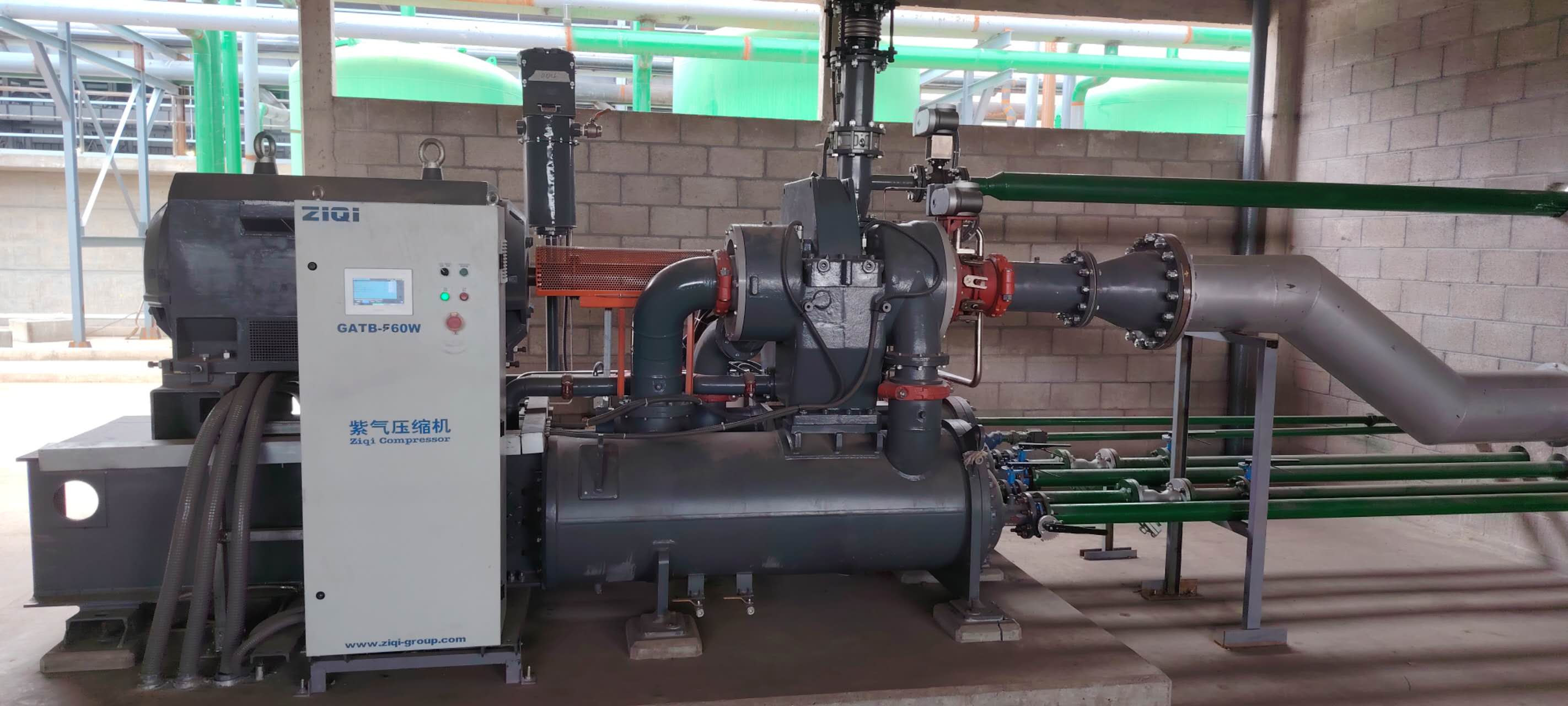
ZIQI GATB-F60W industrial centrifugal air compressor unit installed at an industrial steel plant facility

Chapter 1: The 15 Core Components of a Centrifugal Compressor (with ZIQI GBTB Specs)

While generic descriptions outline basic turbomachinery, true reliability lies in the metallurgical and engineering specifications. Here are the 15 vital components of a centrifugal compressor, detailing how ZIQI upgrades these standards.

1. Inlet Filter: Captures ambient particulates before they enter the system. ZIQI Spec: Multi-stage, heavy-duty filtration ensuring <2-micron purity, critical for protecting high-speed impellers from erosion.
2. Inlet Guide Vanes (IGV): Regulates the volume of air entering the first stage, inducing a pre-swirl to save energy at part-load. ZIQI Spec: Standardized precision IGV modulation, ensuring ±0.05 Bar discharge pressure accuracy.
3. Impeller: The core rotating component that imparts kinetic energy to the gas. ZIQI Spec: 5-axis precision-milled TC4 Aerospace-Grade Titanium Alloy, drastically reducing rotational inertia and eliminating stainless steel fatigue risks.
4. Diffuser: A stationary ring surrounding the impeller that expands the flow area, converting velocity to pressure. ZIQI Spec: Optimized aerodynamic vane or vaneless diffusers, mapped via advanced CFD software for maximum pressure recovery.
5. Volute / Casing: The snail-shaped outer housing that collects compressed air from the diffuser and directs it to the next stage or discharge. ZIQI Spec: Horizontally split casting for ease of maintenance and rotor inspection.
6. Rotor Shaft: Holds and rotates the impellers. ZIQI Spec: High-alloy forged steel, dynamically balanced to ISO 1940 G1.0 standards to ensure near-zero vibration at tens of thousands of RPMs.
7. Bearings: Support the high-speed rotor shaft radially and axially. ZIQI Spec: Hydrodynamic tilting pad bearings, capable of absorbing load fluctuations and preventing oil whip at extreme speeds.
8. Seals (Air & Oil): Prevents pressurized air from leaking out and lube oil from entering the air stream. ZIQI Spec: Non-contact labyrinth seals with a central atmospheric vent gap. This physical barrier ensures absolute TÜV Class 0 oil-free compliance.
9. Intercoolers: Heat exchangers located between stages to cool the air, increasing its density for the next compression stage. ZIQI Spec: Water-in-tube, air-in-shell design using high-efficiency finned tubes for maximum heat transfer.
10. Aftercooler: Cools the final discharged air before it enters the plant air network. ZIQI Spec: Oversized heat exchange area guaranteeing an approach temperature of <10°C.
11. Moisture Separator: Removes condensed water generated during the intercooling and aftercooling processes. ZIQI Spec: Centrifugal impingement separators with zero-loss automatic electronic drains.
12. Bull Gear & Pinions: An integral gear system that steps up the motor's standard RPM (e.g., 3000/3600) to the extreme speeds required by the impellers. ZIQI Spec: AGMA Class 12 / DIN Class 4 precision hardened and ground helical gears.
13. Main Drive Motor: The primary power source driving the bull gear. ZIQI Spec: IEC 60034-30-1 standard IE4/IE5 ultra-high-efficiency motors with PT100 temperature sensors.
14. Lube Oil System: Provides critical hydrodynamic lubrication to the gears and bearings. ZIQI Spec: Independent oil console featuring twin oil pumps (main and auxiliary), oil coolers, and fine filtration, fully compliant with API 614 philosophies.
15. Control Panel (PLC): The "brain" managing startup, operation, and safety interlocks. ZIQI Spec: Advanced touchscreen PLC with proprietary surge detection algorithms and seamless SCADA/DCS integration.

Chapter 2: Advantages of Centrifugal Architecture

Why do heavy industries upgrade to centrifugal technology when their capacity demands exceed 100 m³/min? The primary reasons are rooted in fundamental physics:

  • True 100% Oil-Free Air (ISO 8573-1): Because there is no mechanical contact between the impellers and the casing, no lubrication is needed in the compression chamber. This is fundamentally safer for sensitive processes than "oil-free" screw compressors that rely on complex, degrading Teflon coatings.

  • Massive Flow Volumes: Dynamic compression allows for tremendous volumes of air in a relatively compact footprint. ZIQI's GBTB flow range extends from 20 m³/min to 350 m³/min.

  • Long-Term TCO (Total Cost of Ownership): Without rubbing parts like rotors or piston rings, the degradation of efficiency over time is virtually zero. Design lifespans routinely exceed 20 years.

Chapter 3: Core Industrial Applications

Centrifugal compressors are the "balance-of-plant" workhorses for continuous-duty sectors. They are universally specified in:

  • Steel & Metallurgy: Converter bottom blowing, continuous casting cooling, and instrument control air.

  • Petrochemical & Refining: Utility air and instrument air networks requiring high reliability.

  • Air Separation: Main feed air compressors (MAC) for nitrogen and oxygen generation.

  • Semiconductor Fabrication: Ultra-clean dry air for cleanroom pneumatic operations.

Chapter 4: Limitations & The ZIQI Engineering Solutions

We believe in absolute technical honesty. Dynamic compressors have distinct physical limitations. Here is how they operate, and how ZIQI engineers specifically mitigate these constraints:

1

Limitation: The Threat of Surge

The Physics: If plant air demand drops below the compressor's minimum stable flow point, a violent flow reversal occurs known as "surge." This can destroy impellers and bearings in seconds.

ZIQI Solution: We engineer to API 617 standards. The GBTB series features an ultra-fast reacting, oversized modulating anti-surge valve (BOV) paired with our PLC's predictive surge mapping logic, bypassing excess air safely before surge lines are crossed.

2

Limitation: Narrow Efficient Turndown Range

The Physics: Centrifugal compressors are most efficient at 100% design load. At part-load, throttling the inlet traditionally wastes massive amounts of energy compared to VSD screw compressors.

ZIQI Solution: Standard integration of Inlet Guide Vanes (IGV). By pre-swirling the air in the direction of impeller rotation, the IGV expands the efficient turndown range (often down to 60-70% flow) while maintaining constant discharge pressure, saving up to 9% energy at part load compared to standard butterfly valves.

3

Limitation: High Initial Capital Cost

The Physics: The 5-axis milling of TC4 titanium, precision bull gears, and complex control systems make the initial purchase price higher than rotary screw options.

ZIQI Solution: While centrifugal is not recommended for sub-20 m³/min needs, for large-scale operations (>100 m³/min), the 20-year TCO overwhelmingly favors centrifugal due to zero airend replacement costs. To compare architectures, see our detailed guide: Centrifugal vs Axial Compressor.

Chapter 5: Field Evidence — Mexico Steel Mill Mega-Project

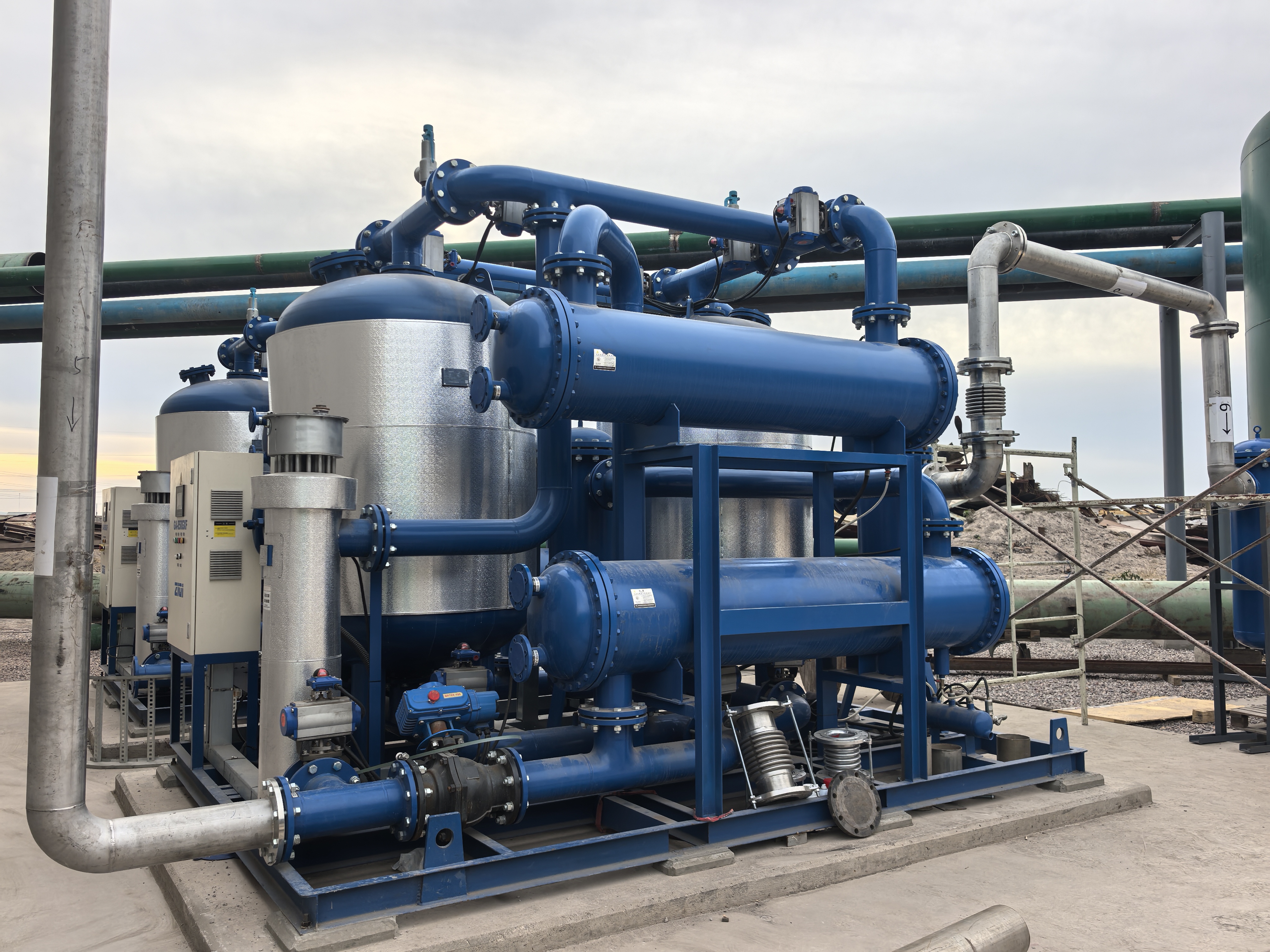
Theoretical physics means little without successful site commissioning. The images below document a ZIQI Turnkey Centrifugal System delivered to a massive modern steel production site in Mexico, a facility with zero tolerance for downtime or oil contamination.
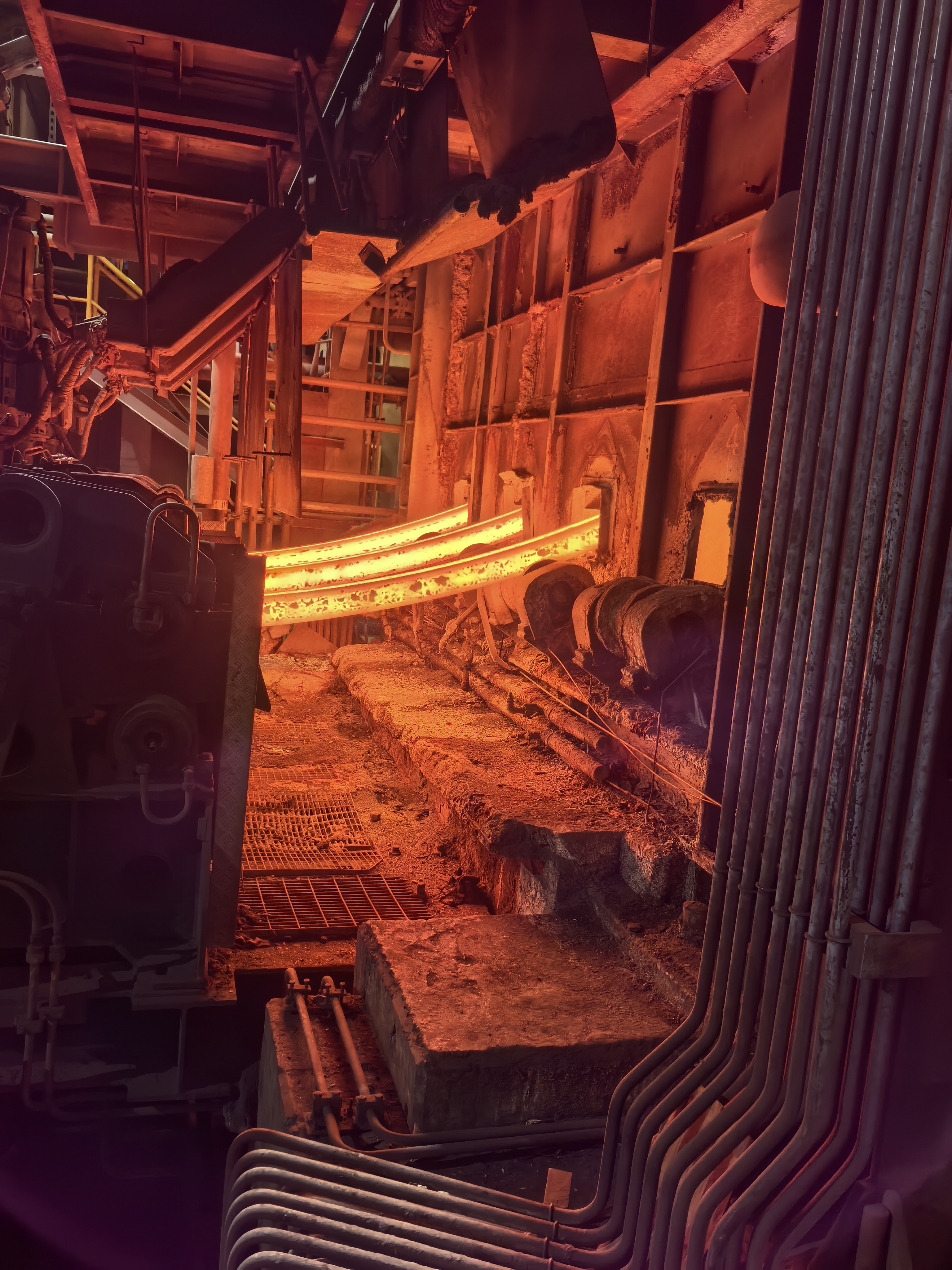
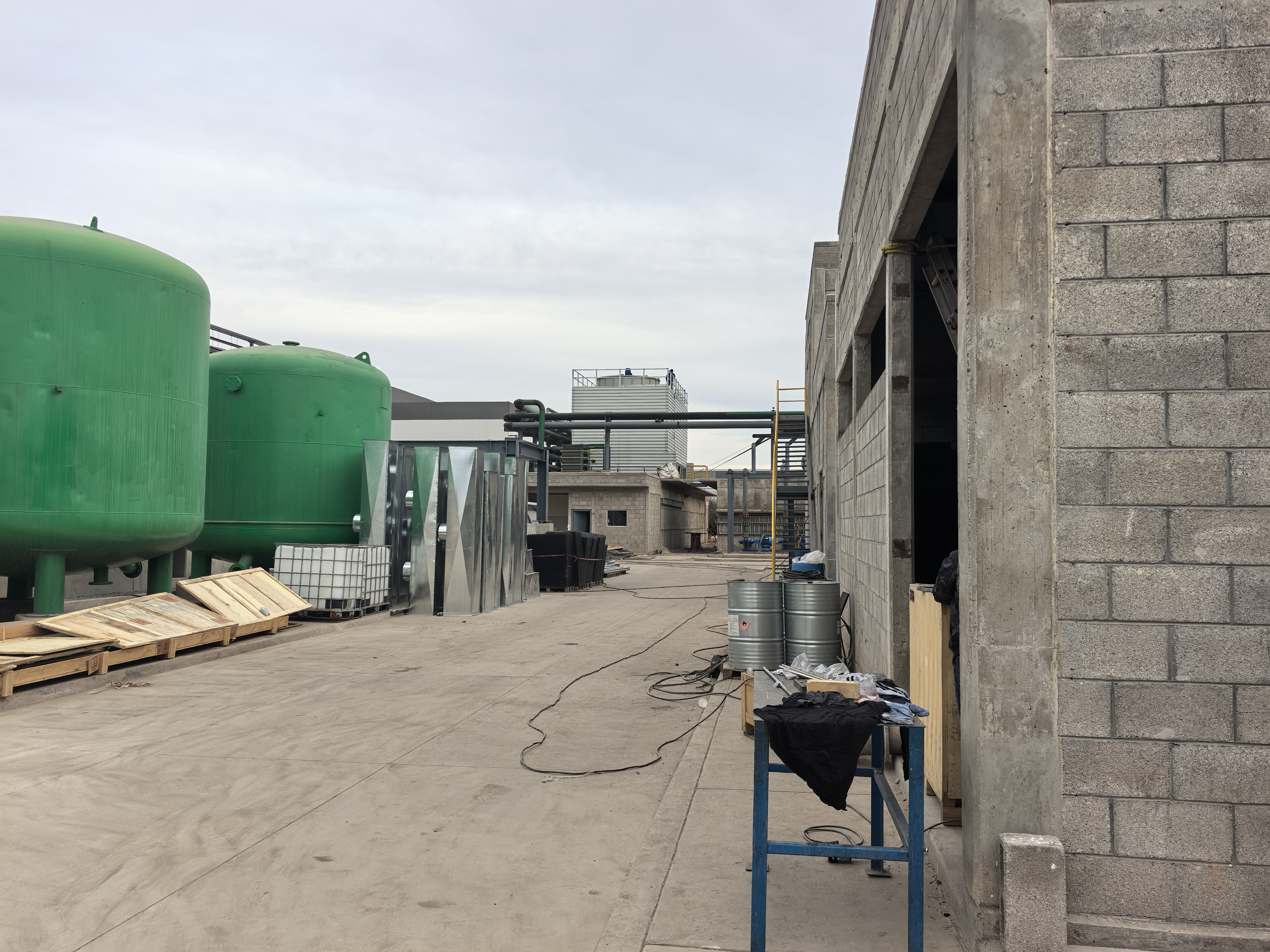
This installation required a heavy-duty skid-mounted cooling system to combat Latin America's high ambient temperatures, alongside high-capacity green air receiver tanks for volumetric buffering. The system achieved a network pressure fluctuation control of ±0.05 Bar, with ISO 8573-1 Class 0 testing proving absolute oil-free output for the continuous casting processes.

Frequently Asked Questions

Q1: How does a centrifugal air compressor work basically?
It works by pulling air into the center of a spinning impeller, flinging it outward to increase its speed, and then passing it through a diffuser that slows the air down, converting that speed into pressure.
Q2: How does centrifugal compare to a rotary screw compressor?
Screw compressors trap air between two spinning rotors to compress it (positive displacement) and are great for varying loads. Centrifugal compressors use dynamic speed (kinetic energy) and are best for constant, high-volume base loads.
Q3: What is "surge" in a centrifugal compressor?
Surge is an unstable operating condition where the system pressure exceeds the compressor's output capability, causing a violent, rapid reversal of airflow that can severely damage internal components. It is prevented by modulating the anti-surge (bypass) valve.
Q4: How can it be 100% oil-free?
Unlike oil-flooded screw compressors, centrifugal impellers do not touch the casing, so they require no internal lubrication. Advanced labyrinth seals and an atmospheric vent physical gap prevent bearing gear oil from ever reaching the compression air flow, ensuring ISO 8573-1 Class 0 purity.
Q5: What maintenance is required for a centrifugal compressor?
Because there are no wearing compression parts, maintenance primarily involves routine changes of inlet air filters, lube oil, oil filters, and periodic vibration monitoring of the hydrodynamic bearings.
Q6: Why are ZIQI impellers made of TC4 Titanium?
Titanium alloy provides a superior strength-to-weight ratio compared to standard stainless steel. This lowers rotational mass, reduces stress on bearings during start-up, and provides exceptional resistance to corrosion in harsh industrial environments.
Q7: What is the purpose of Inlet Guide Vanes (IGV)?
IGVs sit before the first stage impeller. By adjusting their angle, they regulate the volume of incoming air and impart a pre-swirl. This allows the compressor to efficiently reduce power consumption during periods of lower air demand.
Q8: Why are intercoolers necessary between stages?
Compressing air generates massive heat. Intercoolers remove this heat between stages, causing the air to contract and become denser. Compressing cooler, denser air in the subsequent stage requires significantly less mechanical energy, vastly improving overall efficiency.

Technical Buyer Guides

Get a Centrifugal Compressor Technical Proposal

Tell us your industry application, target flow capacity (CFM/m³ per minute), required discharge pressure, and local grid voltage. ZIQI's senior engineers will deliver a fully transparent component specification sheet and factory-direct quotation after reviewing your process.


Basic Information
  • Year Established
    --
  • Business Type
    --
  • Country / Region
    --
  • Main Industry
    --
  • Main Products
    --
  • Enterprise Legal Person
    --
  • Total Employees
    --
  • Annual Output Value
    --
  • Export Market
    --
  • Cooperated Customers
    --
Chat
Now

Send your inquiry

Choose a different language
╳
العربية
Беларуская
Deutsch
Ελληνικά
English
Español
français
Magyar
italiano
Nederlands
Português
русский
Current language:English