ZIQI Compressor For Global Energy Saving, Welcome To Contact Us.  008615026767628
Language
ZIQI Compressor For Global Energy Saving, Welcome To Contact Us. 008615026767628

Compressed Air Systems Engineer
ZIQI Compressor Group · Updated August 2026
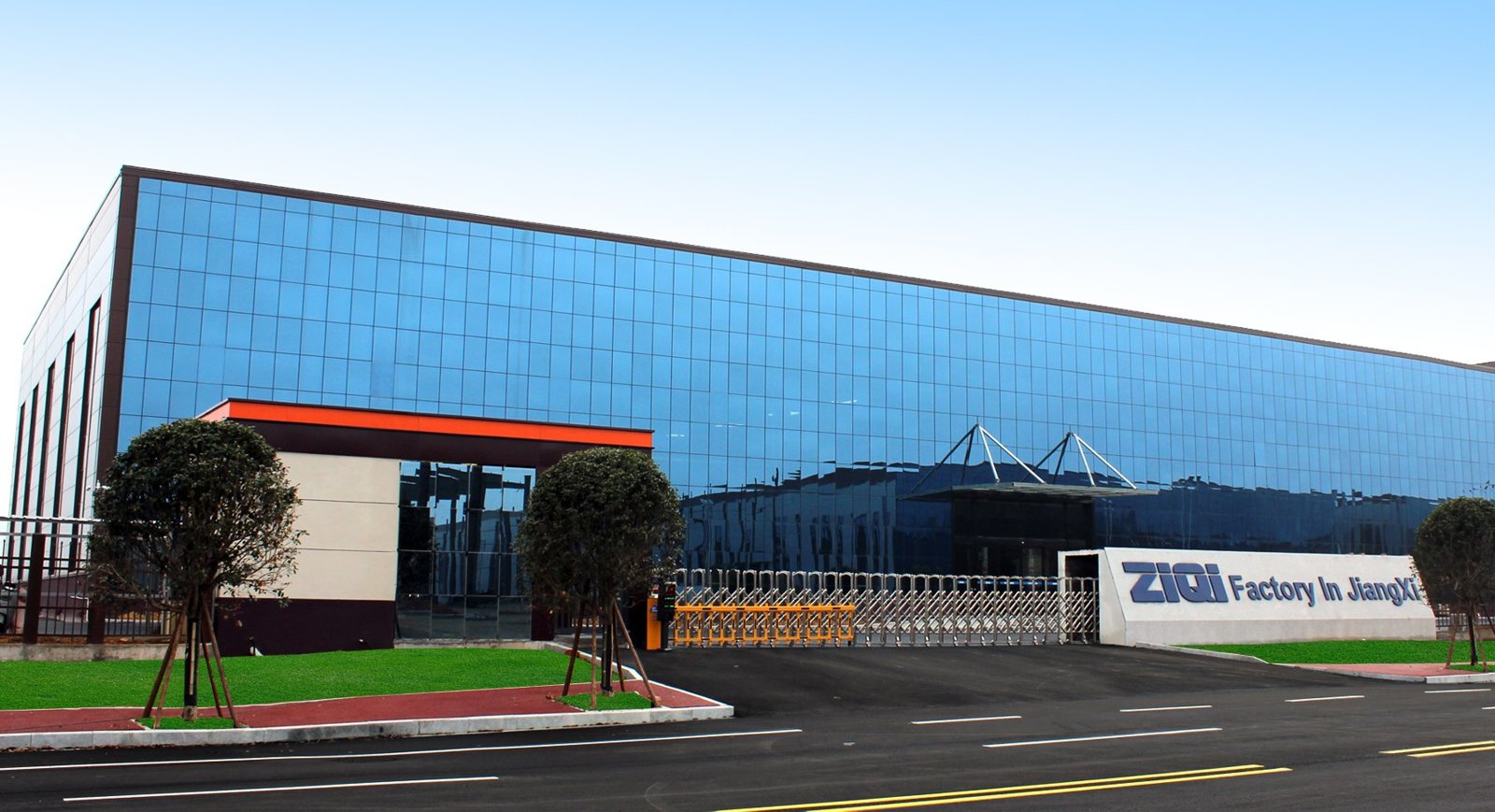
Operating specialized industrial production lines—such as high-power fiber laser cutting beds, PET bottle blow molding machinery, or high-pressure process gas loops—requires a continuous supply of air compressed to 16, 25, or 30 bar. As an established global air compressor manufacturer exporting heavy-duty systems worldwide, ZIQI Compressor Group assists engineering procurement teams in evaluating high-pressure rotary screw equipment. This 2026 technical evaluation guide benchmarks leading high-pressure screw compressor brands across key engineering parameters, detailing why modern plants are rapidly replacing legacy piston boosters with two-stage rotary screw machinery across laser cutting, beverage packaging, and industrial gas applications.
Evaluating high-pressure screw compressor brands requires auditing five critical engineering criteria: 1) Two-stage rotary screw compression with interstage cooling to prevent thermal degradation at 30 bar; 2) IE5-equivalent Permanent Magnet (PM) VFD electric motors to minimize electrical power demand; 3) Low oil carryover levels (<3ppm) to protect laser optics and blow molds; 4) 100% continuous duty cycle ratings (unlike piston boosters limited to 50–60% duty cycles); and 5) Extended maintenance intervals exceeding 8,000 operating hours.
Industrial plants historically relied on reciprocating piston boosters to elevate plant air pressure above 15 bar. However, piston boosters present severe operational drawbacks: intermittent duty cycles (requiring cooling pauses after 30 minutes), heavy vibration, high noise levels exceeding 85 dB, and high oil carryover (10–25ppm) that rapidly fouls downstream tools.
Modern high-pressure rotary screw compressors solve these operational issues through continuous two-stage compression. When auditing high-pressure compressor brands, engineering managers should evaluate suppliers against five technical criteria:
1. Two-Stage Compression with Interstage Cooling: Compressing air directly up to 30 bar in a single stage generates extreme friction and thermal stress. Premium brands utilize two-stage screw airends with interstage cooling to lower internal compression ratios per stage and maintain low discharge temperatures. Explore model details on our GAH Series product page.
2. Permanent Magnet (PM) Motor Efficiency: High-pressure air requires substantial electrical torque. Leading manufacturers pair screw airends with IE5-equivalent PM variable frequency motors to reduce power consumption during fluctuating load cycles.
3. Low Oil Carryover (<3ppm): Pure air is mandatory for sensitive applications. Screw compressors utilize multi-stage air/oil separators to keep oil carryover under 3ppm, compared to 10–25ppm in piston boosters.
4. 100% Continuous Duty Cycle Rating: Unlike piston compressors requiring cooling rest periods every hour, high-pressure rotary screw compressors operate 24/7 at 100% continuous full load.
5. Extended Maintenance Lifecycle: Rotary screw mechanisms feature smooth rotational motion without reciprocating piston rings, extending routine service intervals to 8,000+ operating hours (compared to 2,000–3,000 hours for piston units).
In metal fabrication, high-pressure compressed air serves as an economical assist gas, sweeping molten metal out of the laser cut kerf during high-speed cutting of stainless steel, aluminum, and carbon steel plates.
Stainless Steel & Aluminum (Nitrogen Alternative Air): Requires 20 to 25 bar assist air pressure to achieve clean, burr-free edges without oxidation.
Carbon Steel Cutting: Requires 10 to 16 bar air pressure to balance cutting speed and gas consumption.
Air Quality Impact: Water or oil droplets in assist gas contaminate laser focus lenses, causing lens burning and beam distortion.
For mid-power to high-power fiber lasers (3 kW to 12 kW+), the ZIQI GAH series provides stable high-pressure output within ±0.1 bar pressure tolerances. To review complete model selection across the 5 GAH model sizes (15 kW to 37 kW), consult our GAH 5-model specification guide. For compact workshops running lower-wattage cutters (≤3 kW), review our GA-AL integrated laser cutting compressor guide.
Polyethylene Terephthalate (PET) Stretch Blow Molding (SBM) requires high-pressure air to inflate heated plastic preforms firmly against aluminum mold walls to form precise bottle contours.
Standard Mineral Water & Juice Bottles: Requires 30 bar final-blow pressure. The ZIQI GAH-37 (37 kW) delivering 3.6 m³/min at 30 bar provides direct continuous supply for water bottle lines.
Carbonated Soft Drink (CSD) & Heavy-Wall Containers: Requires 35 to 40 bar final-blow pressure to define 5-petaloid base geometries.
Honest Equipment Boundary: The ZIQI GAH series operates up to a maximum design limit of 30 bar. For 35 to 40 bar CSD lines, a 30 bar GAH compressor operates as a reliable primary air source paired with an additional high-pressure booster.
To evaluate detailed volumetric consumption calculations per cavity and dual-pressure system design for bottling plants, consult our PET bottle blowing pressure guide.
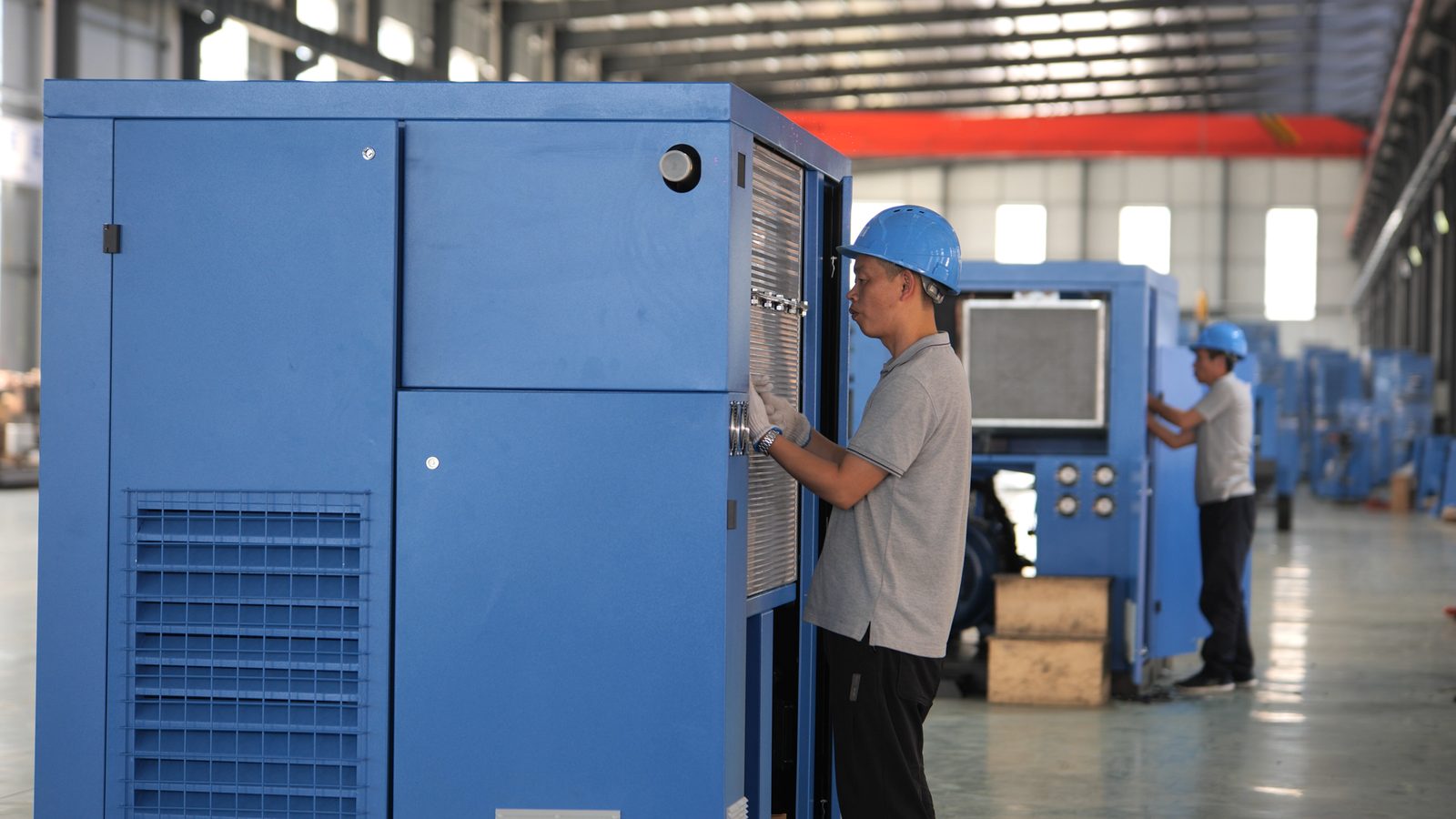
Replacing high-maintenance, energy-intensive piston boosters with a modern two-stage PM VFD high-pressure screw compressor yields immediate financial returns.
Upgraded Equipment: ZIQI GAH-22 (22 kW / 30 HP Two-Stage PM VFD High-Pressure Screw Compressor).
Operating Profile: 6,000 hours/year under continuous industrial production.
Electricity Tariff: $0.10 / kWh industrial rate.
Verified Annual Electricity Savings: $3,300 to $4,600 / Year.
Capital ROI Payback Window: 12 to 18 Months.
To examine how ZIQI's manufacturing infrastructure and quality standards compare globally across general industrial lines, consult our Top Chinese air compressor brands ranking.
Sourcing high-pressure air power for fiber laser cutting, PET bottle blowing, or industrial gas processes? Contact ZIQI's engineering team for custom pressure calculations, CAD drawings, and direct export pricing.
QUICK LINKS
PRODUCTS
CONTACT US
 Email : inquiry@ziqi-group.com
 Tel: +86-15026767628
 Add:Building 2, No. 205, Jianding Road, Fengjing Town, Jinshan District, Shanghai City.China
PLEASE CONTACT US.

ZIQI Compressor (Shanghai) Co., Ltd
Copyright © 2026 ZIQI Compressor (Shanghai) Co., Ltd - All rights reserved.

