ZIQI Compressor For Global Energy Saving, Welcome To Contact Us.  008615026767628
Language
ZIQI Compressor For Global Energy Saving, Welcome To Contact Us. 008615026767628

Compressed Air Systems Engineer
ZIQI Compressor Group · Updated August 2026
When factory procurement teams evaluate industrial compressed air equipment, promotional datasheets often emphasize nominal horsepowers and peak discharge pressures while obscuring long-term mechanical reliability. As an established global air compressor manufacturer, ZIQI Compressor Group analyzes equipment performance from an inverted perspective: evaluating real-world field fault patterns. Rather than accepting manufacturer claims at face value, examining seven universal rotary screw failure modes reveals the underlying engineering standards that separate high-reliability machinery from budget units prone to frequent downtime.
Evaluating rotary screw compressor brands by reliability requires examining how equipment designs prevent common field failures: 1) Thermal stability via oversized 50°C plate-fin coolers; 2) Extended airend lifespan (35,000–45,000 hours for single-stage; 100,000 hours for two-stage); 3) IP55 electric motor protection ratings; 4) Industrial microprocessor controllers that prevent nuisance tripping; and 5) Precision machining tolerances that eliminate fluid leaks and excessive vibration.

In continuous manufacturing environments, compressed air machinery experiences harsh operational stress: high ambient heat, intake dust loads, continuous pressure cycling, and electrical grid fluctuations.
When budget manufacturers cut production costs, they typically compromise on five hidden component areas: heat exchanger surface area, electrical contactor quality, bearing precision, separator filtration media, and housing gasket tolerances. While a new low-cost compressor may operate smoothly during initial commissioning, these hidden shortcuts manifest as chronic field faults within 12 to 24 months of multi-shift operation.
By analyzing field failure diagnostic reports, engineers can trace specific fault symptoms directly back to the manufacturer's component selection and quality control standards.
Field diagnostic data synthesizes rotary screw compressor failures into seven primary operational categories. Each fault category exposes specific engineering compromises made during machinery design:
1. System Overheating: Continuous high operating temperatures stem directly from undersized radiator surface area, cheap thermal control valves, or poor coolant fluid circulation. For step-by-step diagnostic workflows, review our overheating root cause analysis.
2. High-Temperature Emergency Shutdown: Sudden thermal cutoffs during peak summer months indicate a lack of cooling margin. Reliable brands build cooling packages rated for 50°C tropical ambient conditions. Explore temperature cutoffs in our high temperature shutdown diagnostics.
3. Frequent Electrical Tripping: Nuisance breaker tripping points to low-tier motor contactors, inadequate IP protection, or uncompensated phase voltage sensitivity. Examine electrical fault patterns in our tripping fault analysis.
4. Fluid & Coolant Leaks: External oil weeping around pipe fittings and filter heads reveals cheap NBR O-rings, stamped flange connections, and loose assembly tolerances. Consult our oil leak diagnostic guide.
5. High Oil Consumption (Carryover): Compressed air lines contaminated with liquid lubricant indicate poor air/oil separator element design or failing scavenge line check valves. Read our guide on high oil consumption causes.
6. Abnormal Noise & Mechanical Vibration: Knocking or high-pitched grinding noises signal premature drive bearing wear, misaligned couplings, or unbalanced rotor profiles. See our noise and vibration diagnostic.
7. Failure to Start: Control panel lockups and non-responsive start cycles expose low-cost microprocessor boards and unshielded sensor wiring susceptible to electrical noise. Review our won't start troubleshooting guide.
To ensure zero unplanned production downtime, plant managers should audit air compressor manufacturers against five structural engineering benchmarks before issuing procurement orders:
1. Certified Rotary Airend Design Life: Single-stage screw airends must be precision-machined for 35,000 to 45,000 hours of continuous operation (e.g., German GHH-RAND airends). Heavy-duty two-stage airends achieve 100,000 operating hours due to lower pressure ratios per stage.
2. Premium Motor Protection (IP55 / IE4): Drive motors must feature IP55 dust/water jet protection, Class F insulation with Class B temperature rise, and IE4 Ultra-Premium efficiency ratings (such as WEG motors).
3. Industrial PLC Microprocessor & Sensors: Control panels must integrate industrial-grade PLCs and heavy-duty pressure/temperature transducers capable of filtering electrical grid noise.
4. 50°C Tropical Ambient Cooling Package: Coolers must feature enlarged aluminum plate-fin radiators designed to dissipate heat in 50°C ambient environments without thermal trips.
5. Precision Flange Machining & Viton Seals: High-pressure fluid lines must utilize precision-machined flange joints and high-temperature Viton seals to eliminate fluid weeping over 10-year lifecycles.
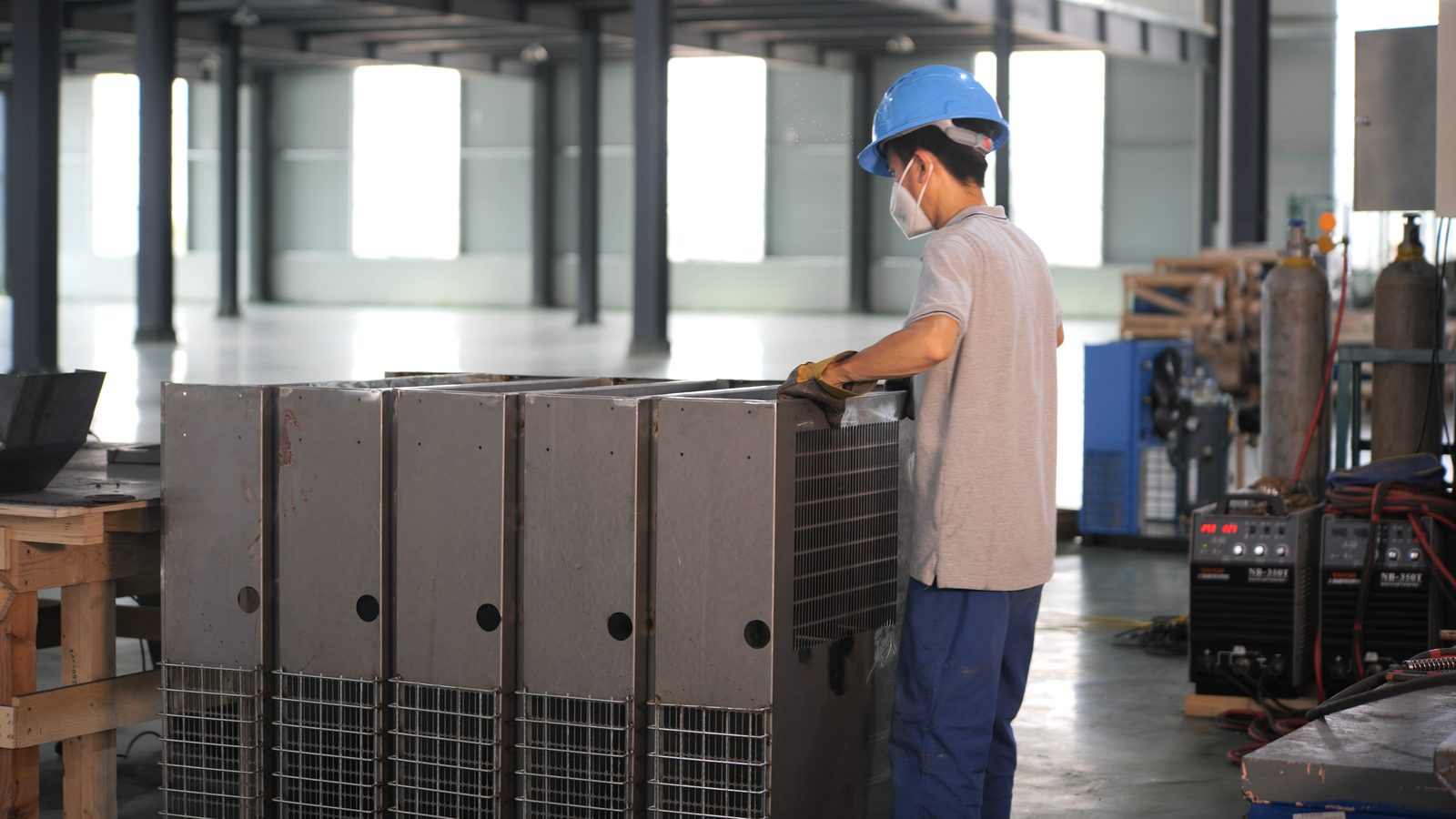
Factory maintenance teams often fall into a trap of repeatedly replacing individual failed components—such as thermal valves, contactors, or separator filters—on budget compressors.
However, when an air compressor suffers from fundamental engineering flaws (such as an undersized cooling matrix or poor frame rigidity), replacing parts only delays the next breakdown. If a compressor incurs recurring thermal shutdowns or electrical trips despite proper routine maintenance, the root cause is structural equipment design.
When ongoing repair expenses and lost production time exceed 30% to 40% of a new machine's purchase value, switching to a higher-reliability brand is the most cost-effective capital strategy. For step-by-step financial evaluation, consult our repair vs replace decision guide.
To benchmark how top Chinese machinery manufacturers compare in component quality and export build standards, consult our comprehensive Top Chinese air compressor brands ranking.
Seeking heavy-duty rotary screw air compressors engineered for zero unplanned downtime? Contact ZIQI's engineering team for custom machinery CAD layouts, technical datasheets, and direct export pricing.
QUICK LINKS
PRODUCTS
CONTACT US
 Email : inquiry@ziqi-group.com
 Tel: +86-15026767628
 Add:Building 2, No. 205, Jianding Road, Fengjing Town, Jinshan District, Shanghai City.China
PLEASE CONTACT US.

ZIQI Compressor (Shanghai) Co., Ltd
Copyright © 2026 ZIQI Compressor (Shanghai) Co., Ltd - All rights reserved.

