BLOG
VR

The Ultimate Buyer's Guide to Chinese Air Compressor Brands 2026: The "4-Metric" Standard

Chinese air compressors range from disposable machinery that fails in three years to world-class industrial equipment that outperforms Western OEMs on total cost of ownership.                 The country of manufacture is not the variable. The components inside the cabinet are. In 2026, the Chinese compressor market splits violently into two tiers — Budget Assemblers and Premium Integrators — and the difference between them will cost or save you six figures over a decade of operation. This guide shows you exactly how to tell them apart before you wire the deposit.
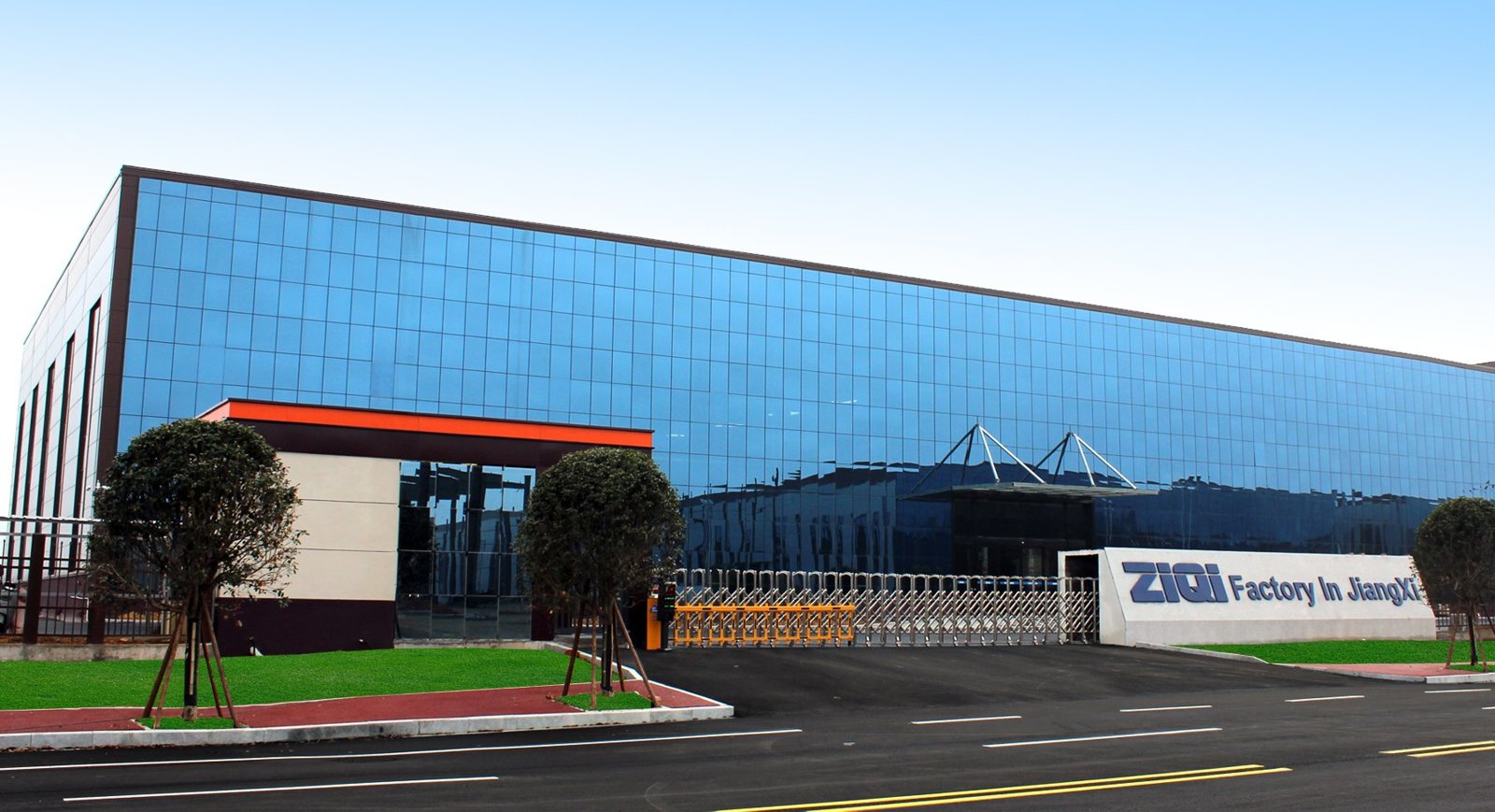
ZIQI air compressor factory in Dexing, Jiangxi, China — front entrance and production building
ZIQI’s 15,000 m² air compressor factory in Dexing, Jiangxi. Company headquarters: Jinshan, Shanghai.

01 — THE MARKET     The Two Tiers of Chinese Manufacturing

Search Alibaba for a 50 HP rotary screw air compressor. You will find prices ranging from $3,500 to $14,000. The photos look nearly identical. The spec sheets claim identical CFM and pressure ratings. The gap is not profit margin. It is internal component specification — and those decisions were made long before the machine was photographed for the listing.

❌ Tier 2: Budget Assembler
  • In-house or reverse-engineered airend

  • Copper-clad aluminum motor windings

  • Carbon steel internal piping

  • Generic or proprietary PLC

  • Passes factory test. Fails year 2–4.

  • No component certifications available

✓ Tier 1: Premium Integrator
  • German GHH-RAND or Rotorcomp airend

  • 100% copper-wound IE4/IE5 motor

  • 304 stainless steel internal piping

  • Open Schneider / Siemens controller

  • Rated 80,000–100,000 hour service life

  • Full component certificates on request

How Budget Assemblers Stay Hidden

The deception is structural, not accidental. A budget assembler's machine will pass initial factory testing because the loose-tolerance airend has not yet worn to the point of measurable CFM loss. The CCA motor windings will not overheat in a climate-controlled factory test cell. The carbon steel piping will not show rust on day one. All the failures are time-delayed — and by the time they surface, the warranty window has closed and your supplier may have cycled to a new product line.

The question is never whether the machine works on delivery day. The question is what it costs you in electricity and repair bills in years three through ten.

Why Premium Integrators Exist

The model is straightforward: China genuinely excels at precision sheet metal fabrication, high-volume assembly, and industrial cabinet manufacturing. Germany genuinely builds the world's best screw compressor airends. Brazil's WEG produces some of the most durable industrial motors on the planet. A premium integrator does not try to compete against decades of German airend engineering — it buys the best airend money can buy, and builds a world-class machine around it using Chinese manufacturing scale to keep costs below Western OEM pricing.

The result is a machine with equivalent core component quality to an Atlas Copco or Kaeser — at 30 to 50 percent lower purchase price and without the service lock-in model those brands have adopted.

02 — THE OTHER TRAP     The Brand Tax: Why Famous Western OEMs Are Not the Safe Default

The standard procurement logic goes: Chinese machines are risky, so I will buy from Atlas Copco or Ingersoll Rand and pay the premium for peace of mind. This logic was sound in 2005. In 2026, it requires reexamination.

Several of the largest Western compressor OEMs have fundamentally shifted their business model. They now sell the compressor at a moderate margin — and recoup profitability through the service contract that the machine itself enforces.

How the PLC Lock Works

The machine ships with a proprietary, encrypted PLC controller. Every operating hour is logged. When the machine hits a programmed service interval — 4,000 hours, 8,000 hours — the controller generates a lockout fault code. The machine will not start normally. The fault cannot be cleared with standard tools. Clearing it requires:

  • An OEM-authorized technician with a proprietary software dongle

  • OEM-sourced consumables (oil, filters, separator elements) at OEM pricing

  • Scheduling around OEM technician availability in your region

The locked machine math: A 75 kW compressor requiring an OEM service visit every 4,000 hours costs approximately $1,200–$2,400 per visit versus $400–$700 using an independent technician and commercially sourced parts. Over 10 years at 8,000 hours per year, that is a service cost premium of $16,000–$40,000. On a machine you already paid a 40% price premium to buy.

This is not an engineering requirement. Open-architecture compressors running Schneider Electric or Siemens controllers maintain service interval tracking without locking the machine. The lock is a business decision. You are paying for the machine and then subscribing to its maintenance monopoly.

The 2026 procurement reality: Budget Chinese machines fail mechanically. Premium Western brands lock you contractually. The third option — premium Chinese integrators with open architecture — has matured to the point where it is the objectively correct choice for most industrial buyers on 10-year TCO.

03 — THE NUMBERS     The TCO Math: Why Purchase Price Is Irrelevant

Every compressor salesperson will give you a purchase price. Almost none will give you a 10-year cost model. Here is the one they are not showing you, for a standard 75 kW (100 HP) screw compressor running 8,000 hours per year:

Cost CategoryBudget Chinese UnitPremium Western OEMPremium Chinese Integrator
Purchase price$5,000 – $9,000$28,000 – $42,000$16,000 – $24,000
10-yr electricity (@ $0.10/kWh)$145,000 – $165,000 (degraded efficiency)$118,000 – $130,000$118,000 – $130,000
10-yr scheduled maintenance$14,000 – $22,000$28,000 – $45,000 (OEM lock-in)$12,000 – $18,000
10-yr unplanned repairs$22,000 – $45,000 (airend, motor)$8,000 – $15,000$6,000 – $12,000
Total 10-Year TCO$186,000 – $241,000$182,000 – $232,000$152,000 – $184,000
13%
Purchase price share of 10-yr TCO
~$50K
Budget unit TCO premium over 10 years
40%
Maintenance savings vs OEM lock-in

The cheap Chinese machine is the most expensive option on a 10-year timeline — primarily due to airend efficiency degradation (paying full electricity for reduced air output) and unplanned repair costs. The premium Western OEM is nearly as expensive — primarily due to service lock-in. The premium integrator wins on total cost because it combines first-tier component reliability with an open service model.
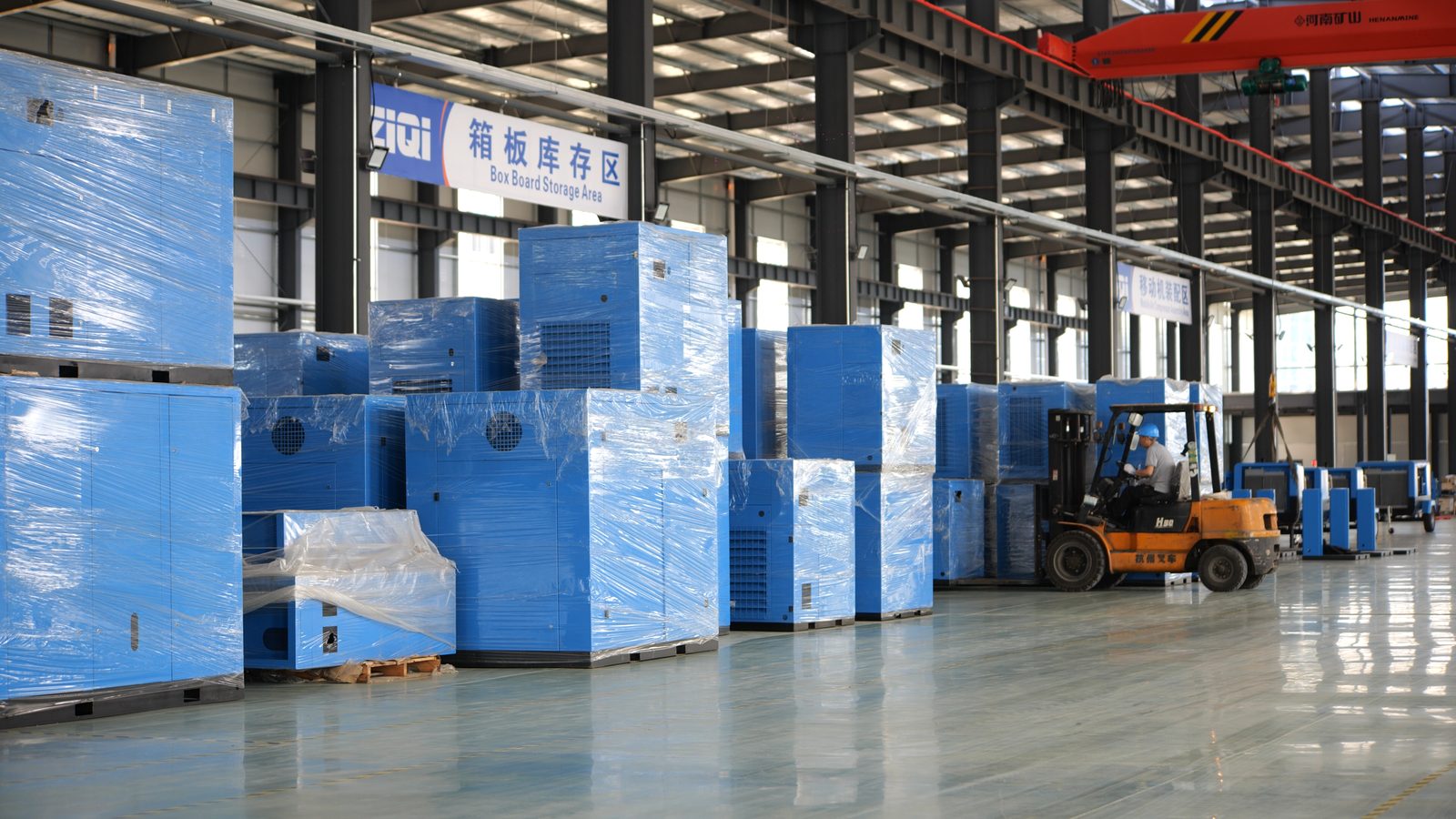
ZIQI air compressors packed and ready for shipment in the factory
Air compressors packed for shipment at the ZIQI factory.

04 — THE STANDARD     The 4-Metric Vetting Standard

Do not ask a supplier if their machine is good. Ask them to prove it against these four specific hardware specifications. Every claim must be backed by documentation. No documentation = no deal.

⚙️
Metric #1 — The Heart
Airend Origin
Budget brands cast their own airends. Rotor tolerances are loose. After 15,000–20,000 hrs, CFM drops 15–25% below nameplate. Motor draws full power, machine delivers less air. No alarm fires.
Premium standard: German GHH-RAND or Rotorcomp airends. Micron-level rotor tolerance. Independently rated 100,000-hour zero-degradation service life. Airend certificate ships with unit.
⚡
Metric #2 — The Muscle
Motor Winding Material
The hidden scam: copper-clad aluminum (CCA) windings look identical to copper on the surface. Aluminum core has 60% of copper conductivity. Runs 15–25°C hotter. Trips on overload in summer. You can't detect it visually.
Premium standard: WEG (Brazil) or Wolong IE4/IE5 PM motors with third-party certified 100% copper windings. Material test certificate ships with every unit. Ask for it — a serious supplier provides it immediately.
🔩
Metric #3 — The Veins
Internal Piping Material
95% of compressors — at all price points — use carbon steel internal piping. Condensate corrodes it. Rust sludge enters the oil. Bearing wear accelerates 30–50%. Result: airend seizure years ahead of schedule.
Premium standard: 100% 304 stainless steel press-fit piping throughout the full compression circuit. Never corrodes. Zero pressure drop increase over time. Bearing protection for the machine's full service life.
🔓
Metric #4 — The Brain
Controller Architecture
Western OEMs use encrypted proprietary PLCs. Service interval hits → machine locks → only OEM technician with proprietary tool can reset → only OEM parts accepted. Lifetime service monopoly baked into firmware.
Premium standard: Open architecture with Schneider Electric / Siemens standard components. Any technician. Any parts supplier. No software lock. No reset ransom. You own the machine completely.

05 — DUE DILIGENCE     The Exact Questions to Ask Before Wiring a Deposit

Paste these four questions verbatim into your supplier communication. Evaluate not just the answers, but the speed and confidence with which they respond. A supplier who has nothing to hide answers immediately with documentation attached.

4-Metric Supplier Vetting Checklist
  • Airend: Which company manufactured your airend? Can you provide the airend OEM certificate and serial number prefix so I can verify it independently?

  • Motor: Can you provide a third-party material certification confirming 100% copper motor windings — not copper-clad aluminum? What is the motor IE efficiency class and brand?

  • Piping: What material is used for the internal compression circuit piping — carbon steel, rubber hose, or stainless steel? Can you show me a photo of the opened cabinet and a material specification?

  • Controller: What brand and model is the PLC controller? Is it open-architecture (serviceable by any technician with standard tools) or proprietary (requires OEM reset tools)?

Red flag responses to watch for: "Our airend is equivalent to GHH-RAND quality" (not the same as using one). "Our motor uses copper wire" without a certificate. "Our piping is anti-rust treated" (treated carbon steel still corrodes). "Our controller is advanced and proprietary" (translation: locked).
Green light responses: Immediate provision of airend OEM certificate with serial number format. Motor material test report from third-party lab. Cabinet photo showing stainless steel press-fit piping. Controller panel showing Schneider or Siemens component labels with no proprietary dongle requirement for service reset.

06 — THE ZIQI STANDARD     Why ZIQI Operates Differently

ZIQI Air Compressor does not compete on price. We compete on verifiable specification. The Bill of Materials is not a trade secret — it is the product. Every claim on our spec sheet exists because a named Tier-1 supplier manufactured the component and provided the certificate to prove it.

ComponentIndustry StandardZIQI StandardWhy It Matters
AirendIn-house or genericGHH-RAND / Rotorcomp (Germany)100k-hour rated life, zero CFM degradation
MotorCCA windings, IE2/IE3WEG / Wolong IE4/IE5 PM, 100% copper30% energy saving, no summer trips
Internal pipingCarbon steel304 stainless steel press-fitLifetime rust-free, bearing protection
ControllerGeneric or proprietary PLCOpen-architecture Schneider / SiemensAny technician, no service lock
Result—Documented, verifiable BOMLower 10-yr TCO than any comparable alternative

We target the plant manager who has been burned by a disposable budget machine and the CFO who is tired of paying the brand tax for routine compressor service. The answer to both problems is the same: a transparent supply chain, proven components, and a service model that does not hold your factory hostage.


FAQ     Frequently Asked Questions

Are Chinese air compressors good quality?
Yes — but only the right tier. The Chinese compressor market divides into budget assemblers and premium integrators. Budget assemblers use reverse-engineered airends, copper-clad aluminum motors, and carbon steel piping that rusts within 3 years. Premium integrators source German GHH-RAND or Rotorcomp airends, WEG or Wolong IE4/IE5 copper-wound motors, and 304 stainless steel piping — delivering machines that match or exceed Western OEM reliability at significantly lower TCO.
What is the best Chinese air compressor brand?
The best Chinese compressor brands operate as premium integrators rather than budget manufacturers. They import critical components from global Tier-1 suppliers — German airends, Brazilian IE4/IE5 motors, Swiss or German controllers — and combine them with Chinese manufacturing scale. ZIQI Air Compressor is a leading example, using GHH-RAND airends, WEG copper motors, 304 stainless steel piping, and open-architecture Schneider Electric controls across its full product range.
Why are some Chinese air compressors so cheap?
Extremely low prices indicate specific cost-cutting decisions: copper-clad aluminum (CCA) motor windings instead of pure copper, carbon steel internal piping that corrodes within 2 to 3 years, and in-house or reverse-engineered airends with loose rotor tolerances that lose 15 to 25 percent of CFM output after 15,000 to 20,000 hours. The machine passes factory testing. The failures accumulate over years 2 through 5 of operation.
Should I buy an Atlas Copco or a Chinese air compressor?
Premium Western brands offer reliable machines but have shifted to a lock-in revenue model using proprietary encrypted PLCs. When your Atlas Copco or Ingersoll Rand hits a service interval, the controller locks the machine — requiring an OEM-authorized technician with a proprietary reset tool, OEM-sourced parts at markup, and OEM-branded fluids. A premium Chinese integrator offers equivalent core components (German airends, WEG motors) with open-architecture Schneider or Siemens controllers. Any local technician can service it. Parts are globally available. You save 30 to 40 percent on lifetime maintenance costs.
How do I verify a Chinese air compressor supplier is legitimate?
Ask four specific questions: First, which company manufactured your airend, and can you provide the airend serial number and OEM certificate? Second, can you provide a motor winding material certificate confirming 100 percent copper windings? Third, what is the internal piping material — carbon steel, rubber hose, or stainless steel? Fourth, what brand and model is the PLC controller, and is it open-architecture or proprietary? A serious supplier answers all four immediately and provides documentation. Evasive answers or missing certifications are disqualifying.
What is a premium integrator in the air compressor industry?
A premium integrator is a Chinese compressor manufacturer that deliberately sources best-in-class subcomponents from global Tier-1 suppliers rather than producing everything in-house. The business model leverages China's manufacturing efficiency for frames, cabinets, and assembly while importing German airends for compression precision, Brazilian or Chinese premium motors for electrical performance, and using globally standardized control hardware. The result is a machine that combines European component reliability with Chinese manufacturing cost structure — without the Western OEM service lock-in.
What is TCO for an air compressor and how does it affect my buying decision?
Total Cost of Ownership (TCO) covers purchase price, electricity, scheduled maintenance, and unplanned repairs over the machine's operating life. For a 75 kW compressor running 10 years, the purchase price accounts for approximately 13 percent of TCO. Electricity accounts for roughly 72 percent. A compressor that is $6,000 cheaper upfront but runs at 8 percent lower efficiency costs an additional $48,000 in electricity over 10 years. Buying on sticker price is the most expensive decision you can make.
Do Chinese air compressor warranties hold up internationally?
Warranty value depends entirely on the supplier, not the country of origin. Budget assemblers offer warranties that are difficult to enforce and often require shipping the unit back to China for repairs. Premium integrators with international distribution and service networks provide enforceable warranties with local support. Before purchasing, verify the supplier has an established service presence in your region, a clear spare parts supply chain, and documented warranty claim procedures in writing.
Audit Your Current Supplier
Don't Buy a
Black Box.
Download our full Bill of Materials and challenge any supplier to match it — component by component, certificate by certificate.
Basic Information
  • Year Established
    --
  • Business Type
    --
  • Country / Region
    --
  • Main Industry
    --
  • Main Products
    --
  • Enterprise Legal Person
    --
  • Total Employees
    --
  • Annual Output Value
    --
  • Export Market
    --
  • Cooperated Customers
    --
Chat
Now

Send your inquiry

Choose a different language
╳
العربية
Беларуская
Deutsch
Ελληνικά
English
Español
français
Magyar
italiano
Nederlands
Português
русский
Current language:English